
Creating a sanctuary for pollinators in your backyard is a rewarding way to support the local environment while adding a touch of rustic charm to your landscape. Using reclaimed pallet wood for a butterfly house is an eco-friendly choice that gives old materials a brand-new life in your garden. These structures are specifically designed to provide a safe haven for butterflies to hide from predators, wind, and heavy rain. Because pallets are often made from durable hardwoods or pine, they offer a sturdy frame that can withstand the elements for many seasons. Incorporating these houses into your garden design not only benefits the insects but also serves as a beautiful focal point that sparks conversation and interest among guests. You can customize these houses with various finishes, colors, and mounting styles to match your personal aesthetic and the specific needs of the butterflies in your region.
1. Vertical Slit Butterfly House
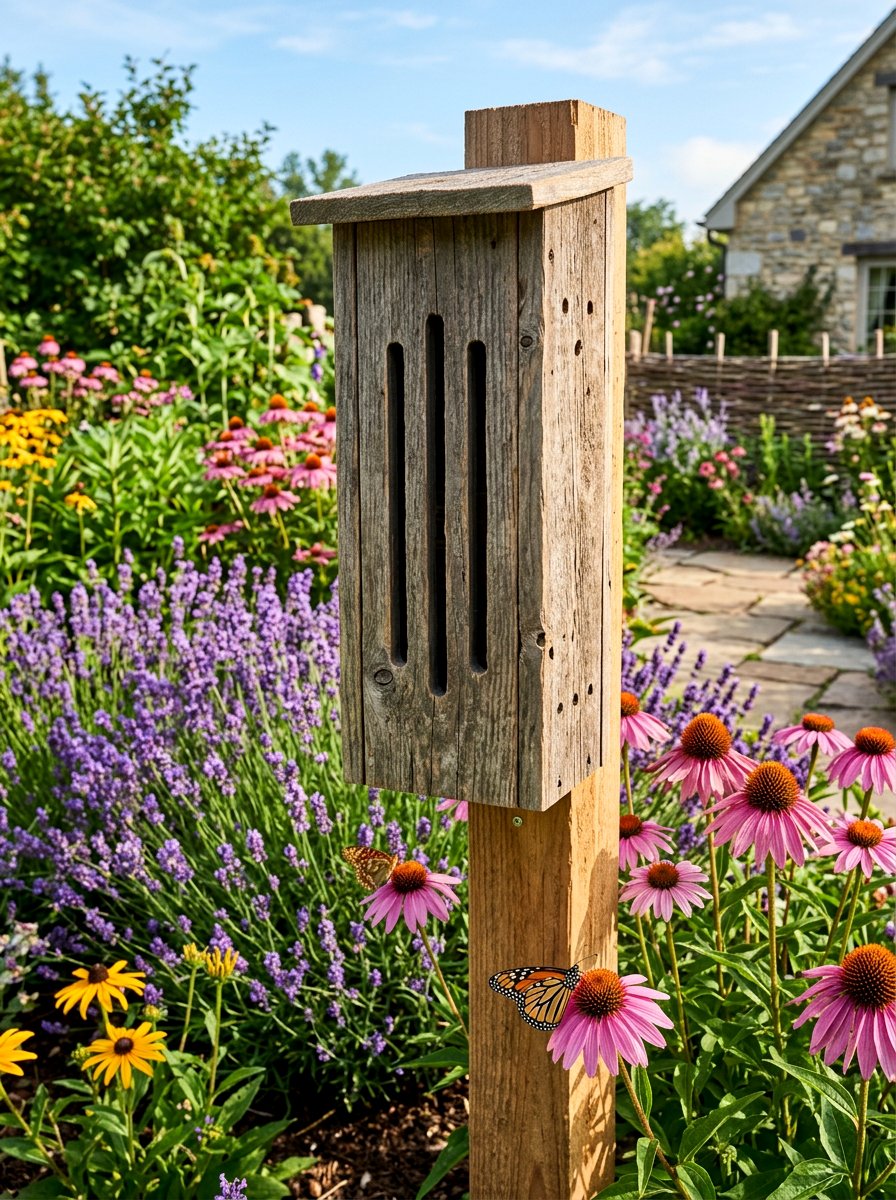
Does your garden need a focal point that also serves a vital ecological purpose for your local pollinators? A vertical slit butterfly house made from pallet wood is a classic choice for any backyard enthusiast who loves nature. These long, narrow openings are specifically designed to mimic the natural crevices in tree bark where butterflies seek refuge during storms or overnight. When you build this using old pallet planks, the rough texture provides a perfect grip for their delicate legs. Place this structure in a sunny spot near your favorite nectar-rich flowers like lavender or milkweed. The natural aging of the wood creates a weathered look that blends seamlessly into a rustic garden landscape while offering essential protection from predators and wind.
2. Painted Pallet Butterfly Shelter
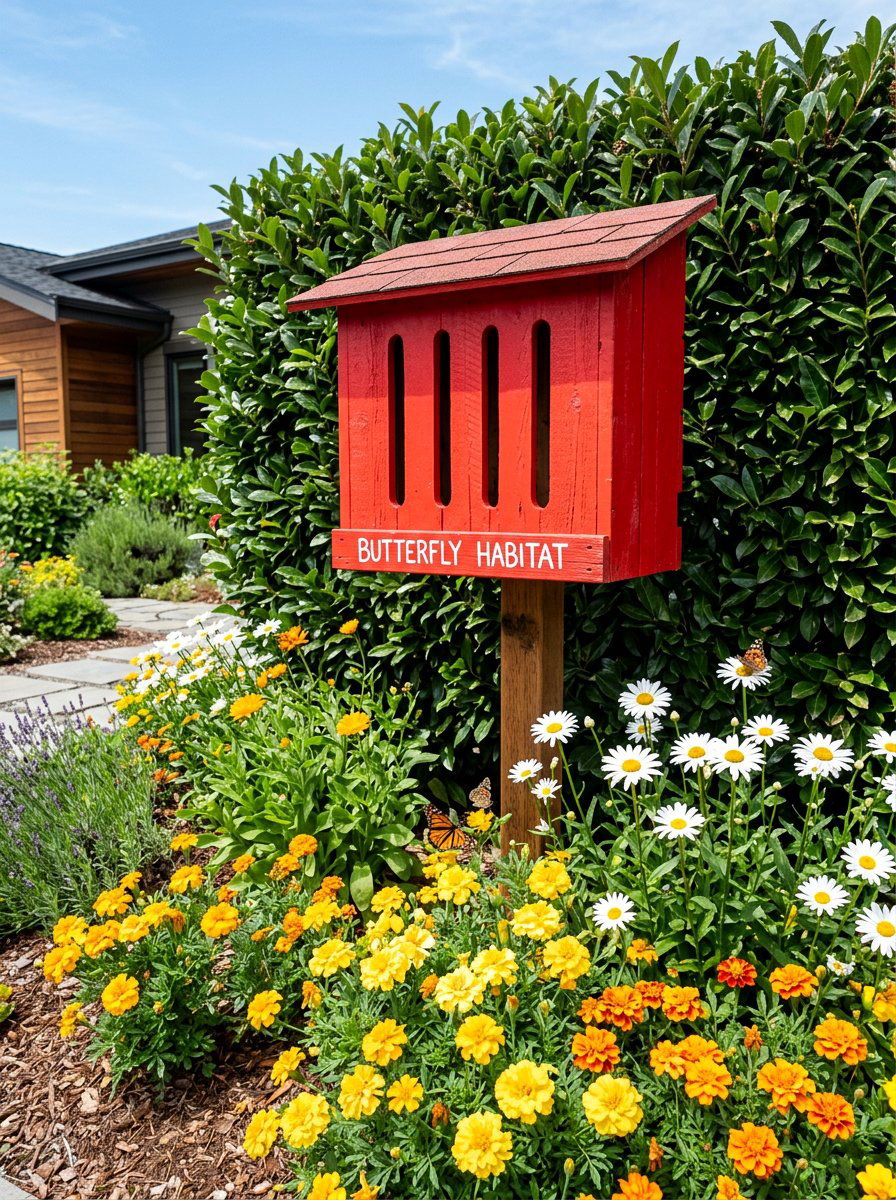
Adding a pop of color to your backyard can be easily achieved with a bright painted pallet butterfly shelter. Butterflies are naturally attracted to vibrant colors like red, yellow, and purple, making a painted house both functional and decorative. When using reclaimed pallet wood, ensure the surface is sanded down before applying a non-toxic, weather-resistant outdoor paint. This design often features a solid front with several thin vertical entries to keep birds and larger insects out. Positioning this colorful shelter against a dark green hedge or a wooden fence makes the colors stand out beautifully. It creates a cheerful atmosphere in your garden while providing a safe, dry space for various butterfly species to rest during the hot summer months.
3. Tall Wood Butterfly Post
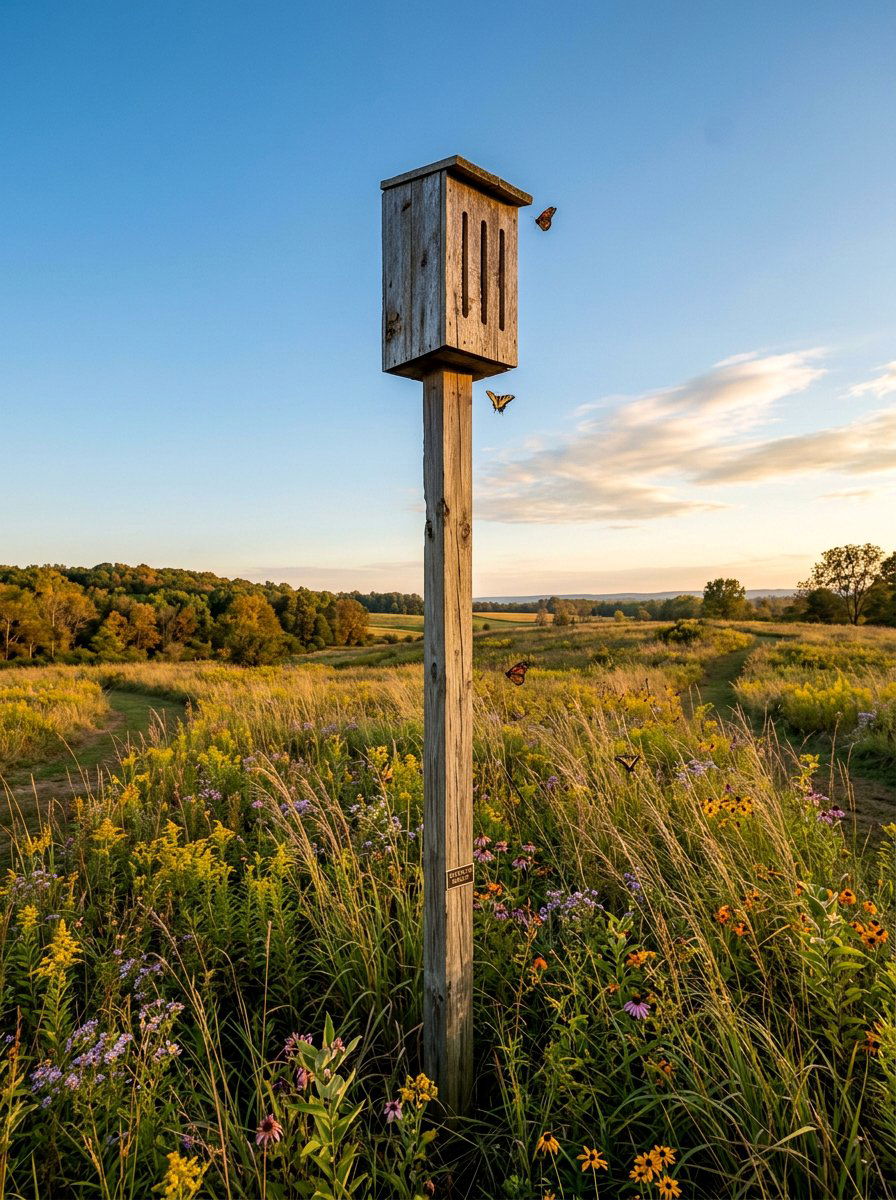
A tall wood butterfly post is an excellent way to add height and vertical interest to your flower beds or garden borders. By mounting a pallet-made butterfly house on a long 4x4 post, you elevate the sanctuary above the surrounding foliage and away from ground-based predators. This design works particularly well in large wildflower meadows or expansive backyard landscapes where you want the structure to be visible from a distance. The pallet wood provides a sturdy, heavy-weight box that won't easily tip over in the wind. You can surround the base of the post with climbing vines or tall perennials like black-eyed Susans to help the structure blend into the natural environment while still remaining accessible to flying insects.
4. Rustic Reclaimed Butterfly Box
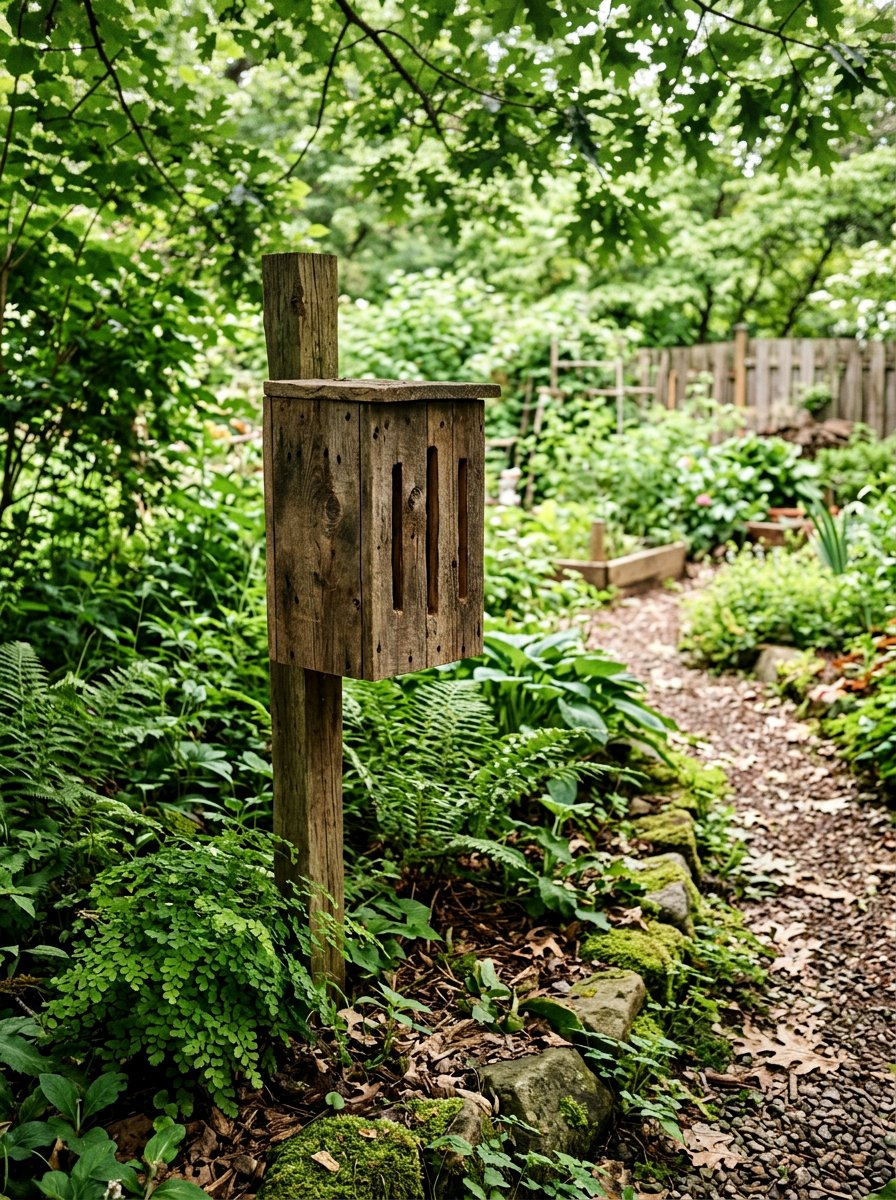
Embrace the beauty of imperfection with a rustic reclaimed butterfly box that celebrates the natural texture and wear of old pallet wood. This design focuses on keeping the wood in its most organic state, perhaps with a simple clear sealant to protect it from rot. The charm of this approach lies in the visible nail holes, knots, and variations in wood grain that tell a story of the material's previous life. Inside the box, you can place a few dry twigs or pieces of bark to give the butterflies something to cling to while they rest. This type of butterfly house looks best in a cottage-style garden or a permaculture backyard where natural materials and biodiversity are the main design priorities.
5. Multi Chamber Insect Hotel
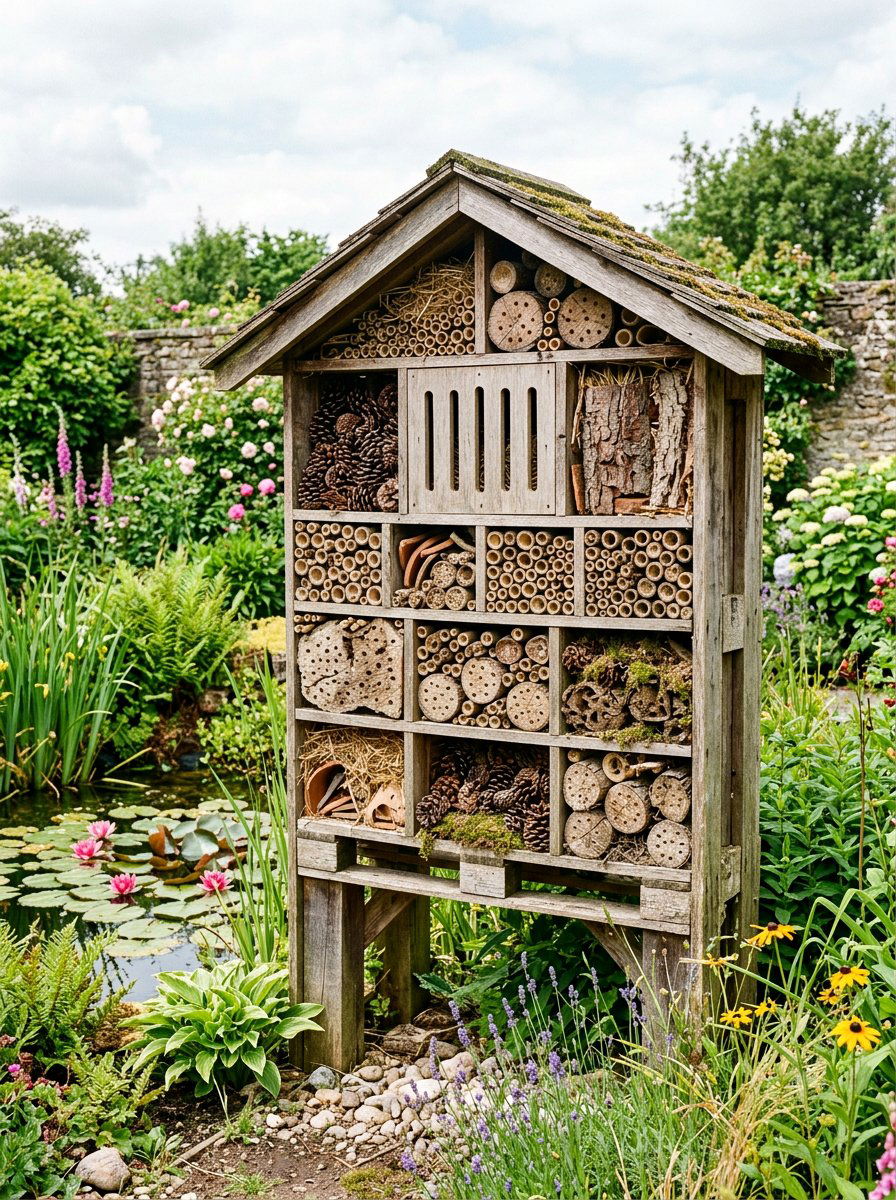
If you want to support a wider range of beneficial garden residents, consider building a multi chamber insect hotel using pallet scraps. This larger structure can include a specific section for butterflies with vertical slits, along with other compartments filled with hollow reeds, pinecones, or drilled logs. By using different parts of a single pallet, you can create a diverse habitat that attracts bees, ladybugs, and butterflies all at once. This design serves as a functional piece of garden art and a valuable educational tool for children to learn about local wildlife. Placing this massive structure in a quiet corner of the yard ensures that many different species can find a safe place to nest and hibernate throughout the year.
6. Angled Roof Butterfly Habitat
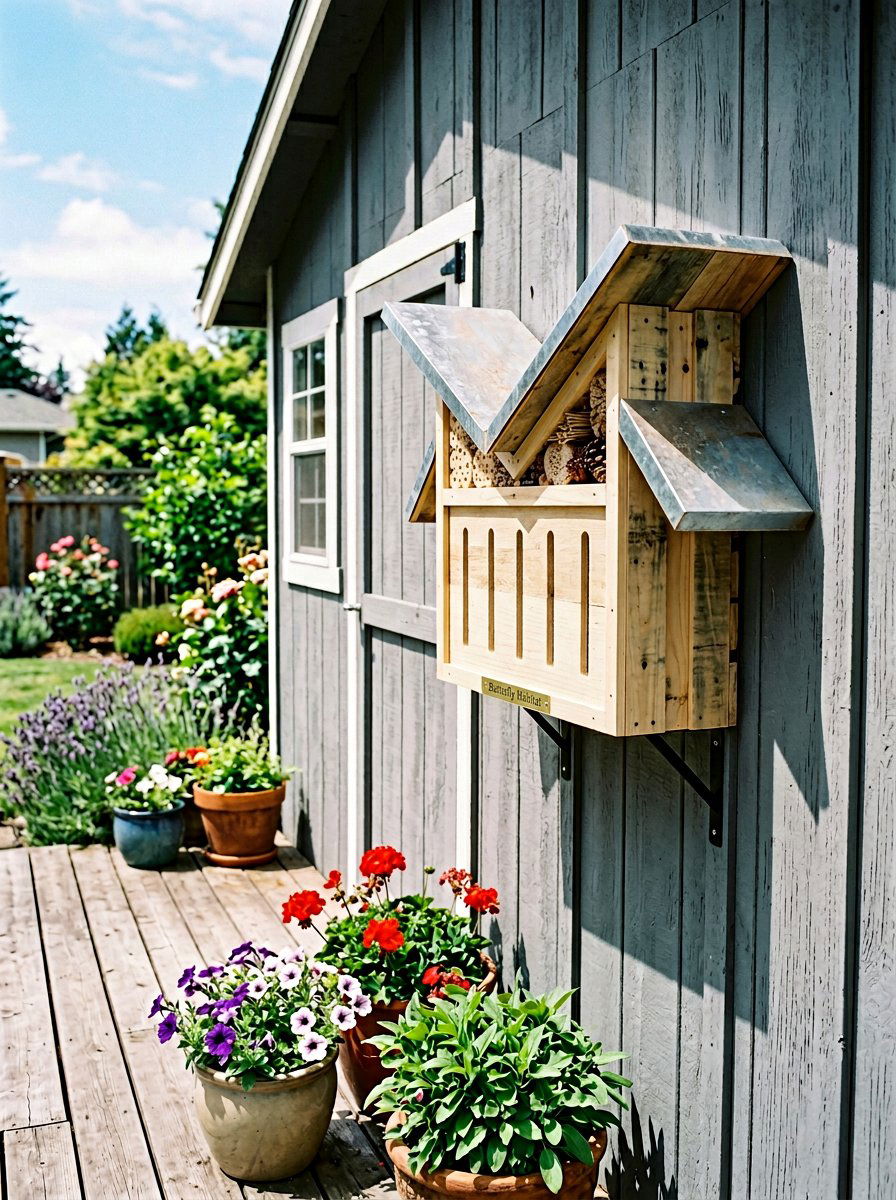
An angled roof butterfly habitat is a smart design choice that helps shed rainwater away from the entrance slits, keeping the interior dry. When constructing this from pallet wood, you can create a dramatic pitch that gives the house a modern or whimsical architectural feel. The overhanging eaves provide extra protection against the elements, ensuring that butterflies remain safe even during intense summer thunderstorms. You might choose to leave the roof natural or cover it with a piece of scrap metal for added durability and a contemporary aesthetic. This design is highly effective and looks great when tucked into a corner of a porch or mounted on a sturdy garden wall near flowering pots and planters.
7. Bark Sided Butterfly House
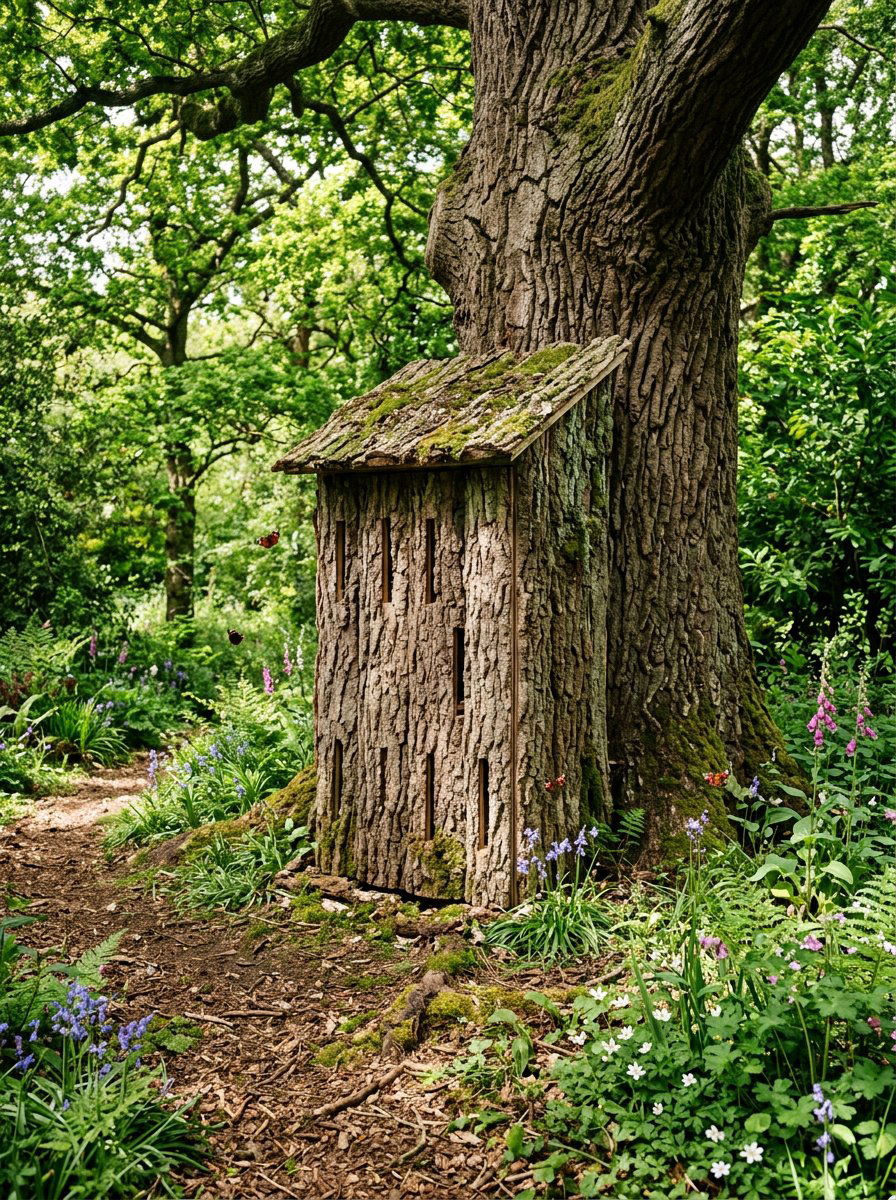
To make your butterfly house look as natural as possible, try creating a bark sided butterfly house using pallet wood as the base. By attaching pieces of real tree bark to the exterior of your pallet structure, you create a camouflage effect that helps the house blend into the surrounding trees. This makes the shelter feel more familiar and inviting to butterflies that naturally seek out old logs and trees for protection. The pallet wood provides the structural integrity needed for a long-lasting box, while the bark adds a beautiful, organic texture. This design is perfect for wooded backyards or shaded garden spots where a brightly painted house might feel out of place or too distracting from the natural scenery.
8. Wall Mount Butterfly Sanctuary
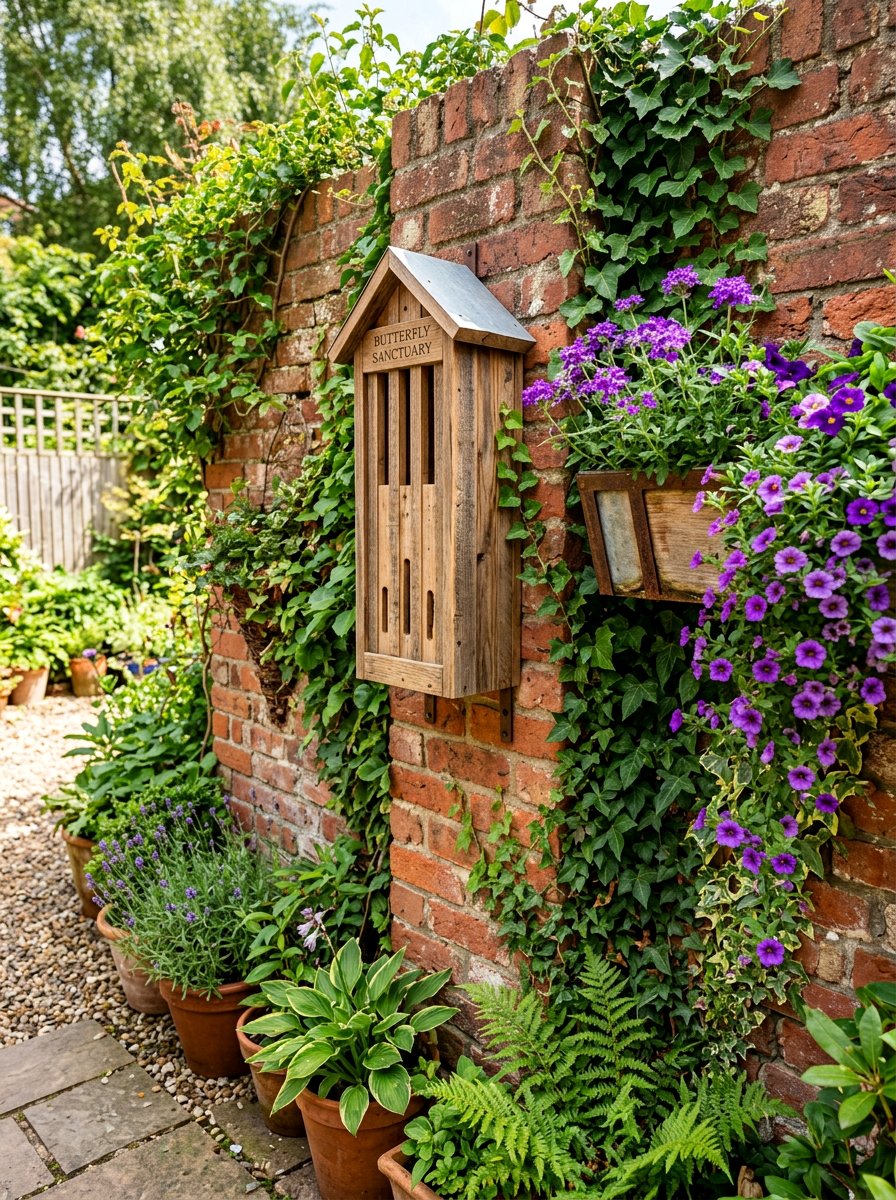
A wall mount butterfly sanctuary is a perfect solution for smaller gardens or urban balconies where ground space is at a premium. These flat-backed houses are designed to be secured directly to a fence, the side of a shed, or even a brick wall. When using pallet wood, you can create a slim profile that doesn't protrude too far into your walking path. Ensure the house is mounted at least four to five feet off the ground to keep the inhabitants safe from pets and foot traffic. By placing it near a wall-mounted planter filled with lantana or zinnias, you create a vertical ecosystem that provides both food and shelter in a very compact and efficient footprint.
9. Yellow Wood Butterfly Home
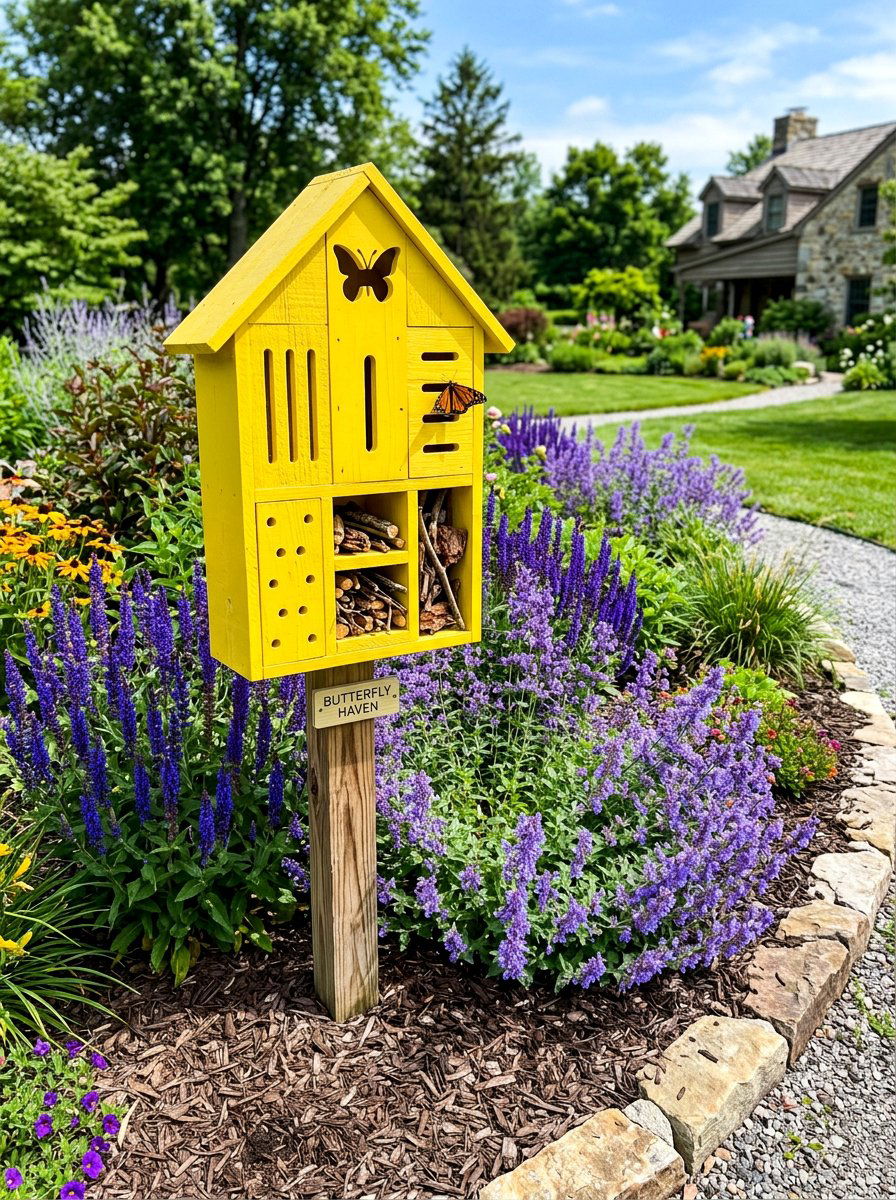
Yellow is one of the most attractive colors for many butterfly species, so a yellow wood butterfly home is a strategic choice for any gardener. Using pallet wood allows you to build a substantial box that can then be coated in a bright, sun-kissed hue. This design often features a simple rectangular shape with the classic vertical slots on the front panel. The bright color makes it easy for butterflies to spot the shelter from across the yard as they forage for nectar. It also adds a cheerful and sunny vibe to your garden, even on cloudy days. Surround this yellow house with blue or purple flowers like salvia or catmint to create a stunning high-contrast visual display.
10. Flower Garden Butterfly Structure
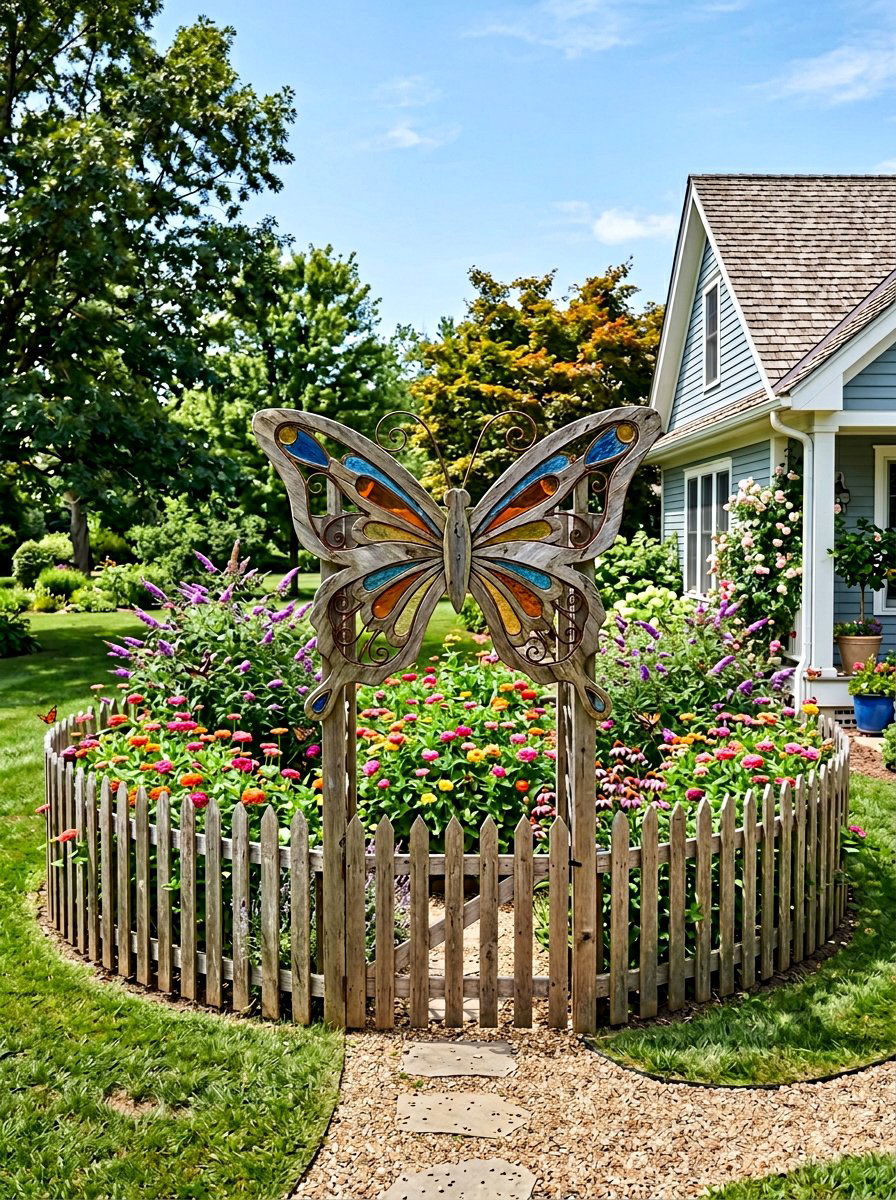
Integrating a butterfly house directly into your landscape as a flower garden butterfly structure creates a cohesive and immersive environment for pollinators. This design approach involves building a pallet house that is part of a larger garden installation, perhaps surrounded by a small picket fence or integrated into a raised garden bed. The goal is to make the house feel like a permanent part of the floral display rather than an afterthought. By using the same pallet wood to create the house and the surrounding garden elements, you achieve a unified look. This setup encourages butterflies to stay in your garden longer because they have everything they need — food, water, and shelter — within a single, beautiful, and well-designed area.
11. Shingle Top Butterfly Box
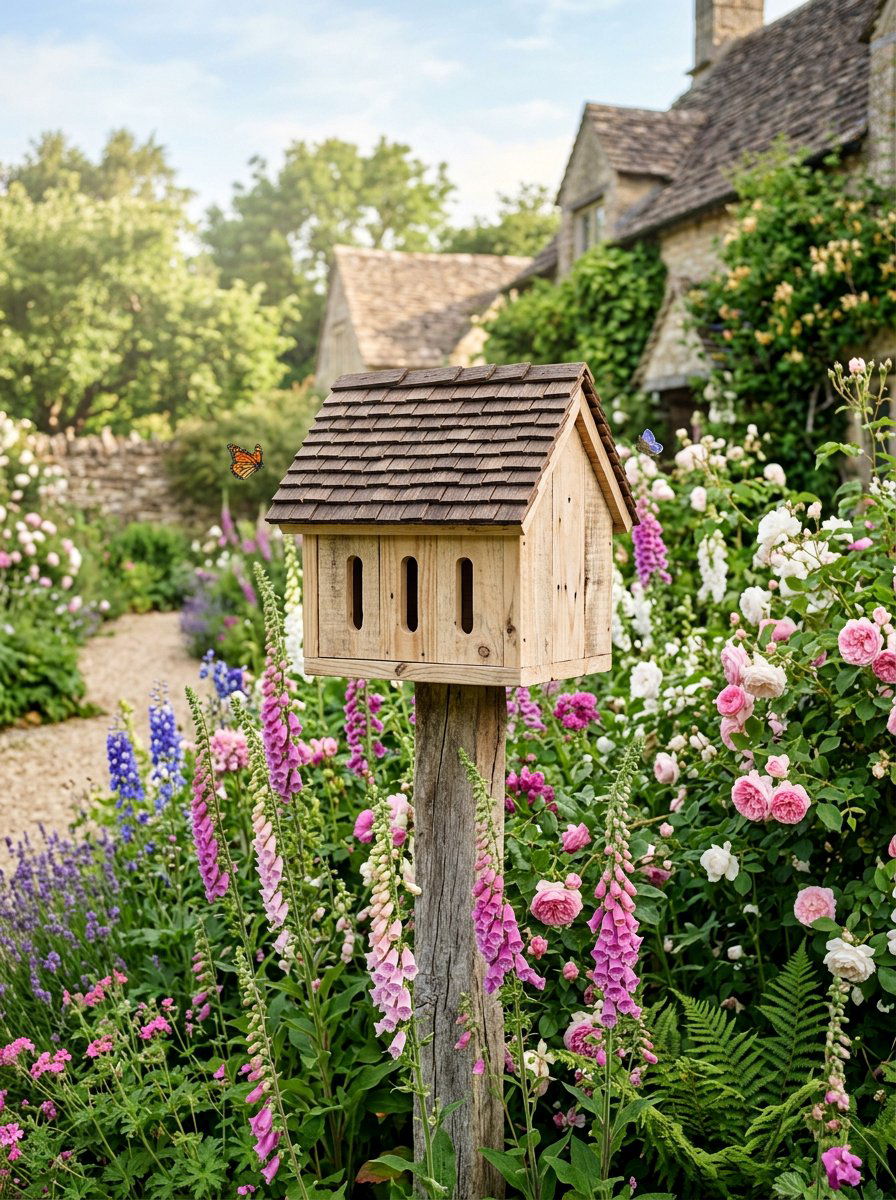
Adding a shingle top butterfly box to your garden provides an extra layer of protection and a touch of traditional craftsmanship. You can create mini shingles using thin slices of pallet wood or even reclaimed cedar shakes to cover the roof of the butterfly house. This detail not only looks adorable but also ensures the house remains completely waterproof during the rainy season. The layered look of the shingles adds a rich texture that contrasts nicely with the smooth or rough-hewn sides of the pallet box. This design is particularly well-suited for traditional or farmhouse-style gardens where attention to small, charming details is appreciated. It looks best when mounted on a wooden post in the middle of a flower bed.
12. Natural Pine Butterfly Shelter
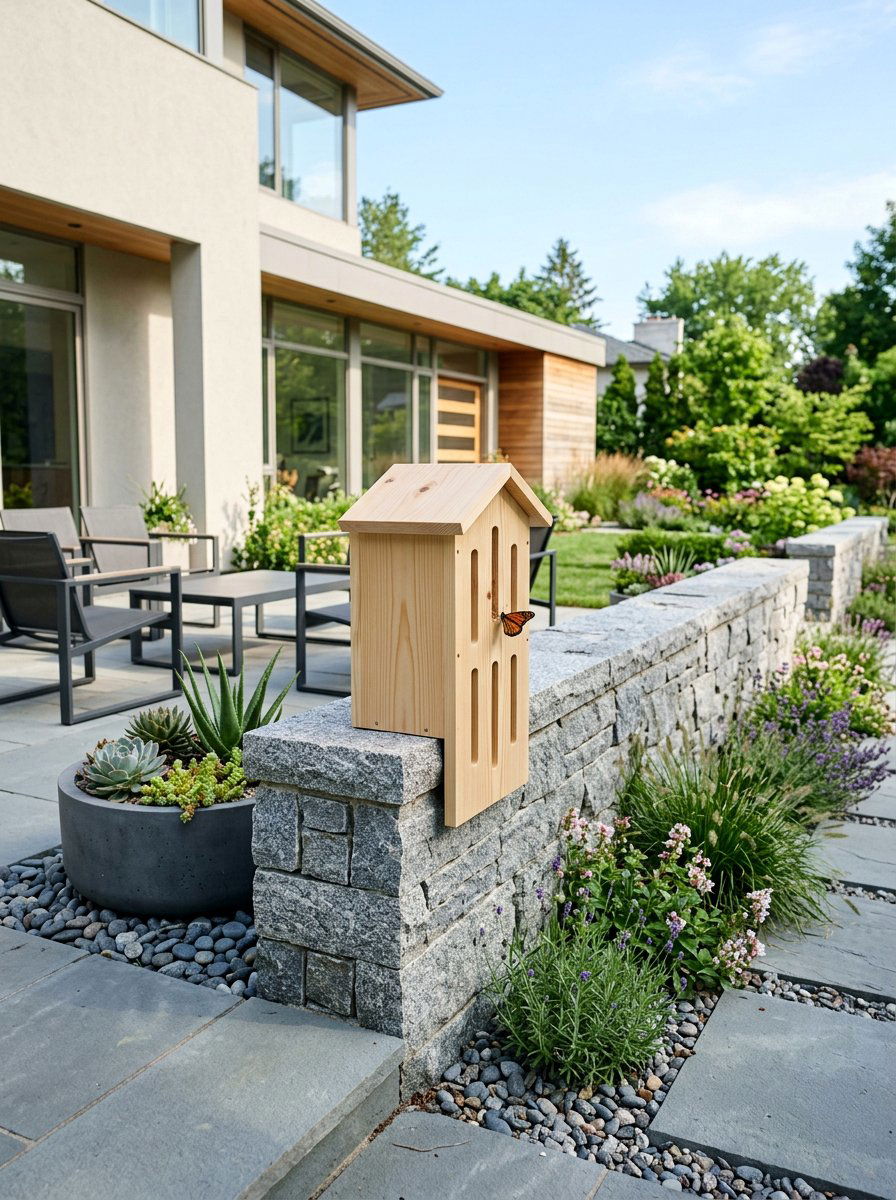
For a clean and minimalist look, a natural pine butterfly shelter made from light-colored pallet planks is an excellent choice. Many pallets are made from pine, which has a beautiful light grain that looks fresh and modern when left unfinished or treated with a clear UV-protectant. This design often focuses on clean lines and simple geometry, making it a great fit for contemporary garden spaces. The light color of the wood doesn't absorb as much heat from the sun as darker wood, which can help keep the interior temperature more stable for the resting butterflies. It offers a subtle and sophisticated way to support local wildlife without overwhelming your existing outdoor decor or garden color palette.
13. Stenciled Pallet Butterfly House
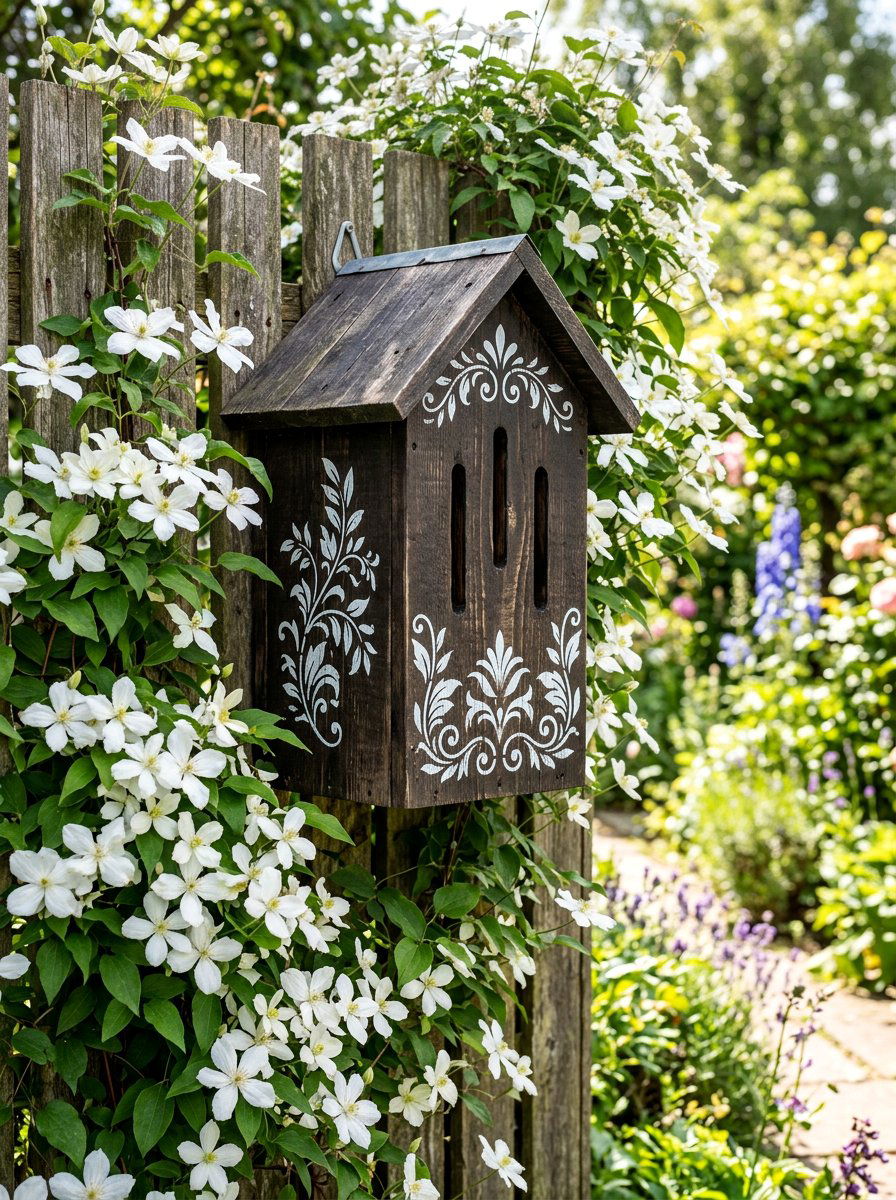
If you enjoy personalizing your garden decor, a stenciled pallet butterfly house allows you to add artistic flair to a functional structure. Once you have built your house from pallet wood, you can use stencils to apply beautiful patterns like flowers, leaves, or even butterfly silhouettes onto the front and sides. This technique allows you to coordinate the house with other elements in your garden, such as stenciled stepping stones or painted furniture. Using earthy tones for the stencils can keep the look sophisticated, while bright colors can make it more playful. The pallet wood provides a great canvas for these designs, especially if it has been sanded smooth to allow the paint to adhere properly.
14. Backyard Pollinator Butterfly Box
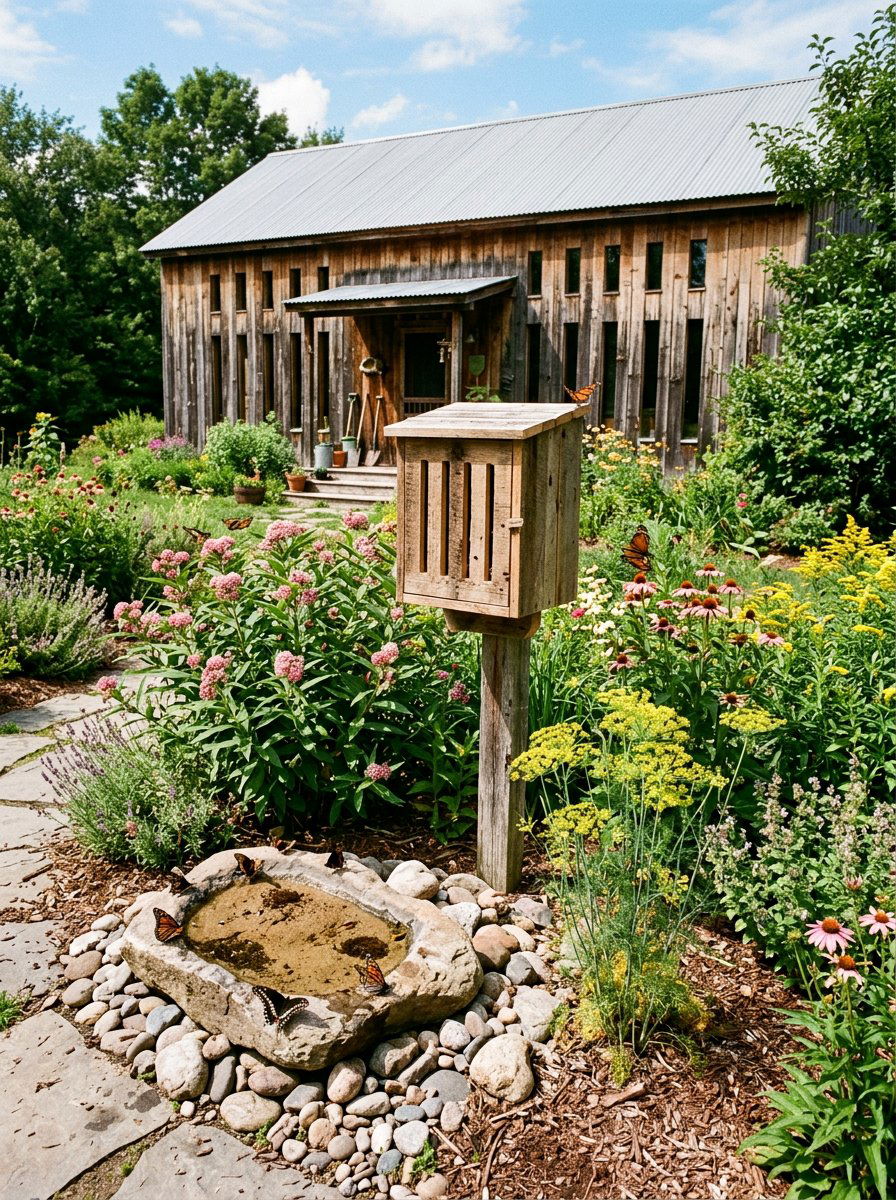
A backyard pollinator butterfly box is designed to be a hard-working part of a healthy garden ecosystem. This style of house is usually built with a large interior space and multiple long vertical slits to accommodate many butterflies at once. When using pallet wood, you can make the box quite wide to provide plenty of room for different species to find a spot. This design is often placed near a water source, such as a butterfly puddling station or a birdbath, to create a complete habitat. The focus here is on functionality and providing the best possible environment for the butterflies, making it a favorite for serious gardeners who prioritize ecological health and biodiversity above all.
15. Wide Slotted Butterfly Habitat
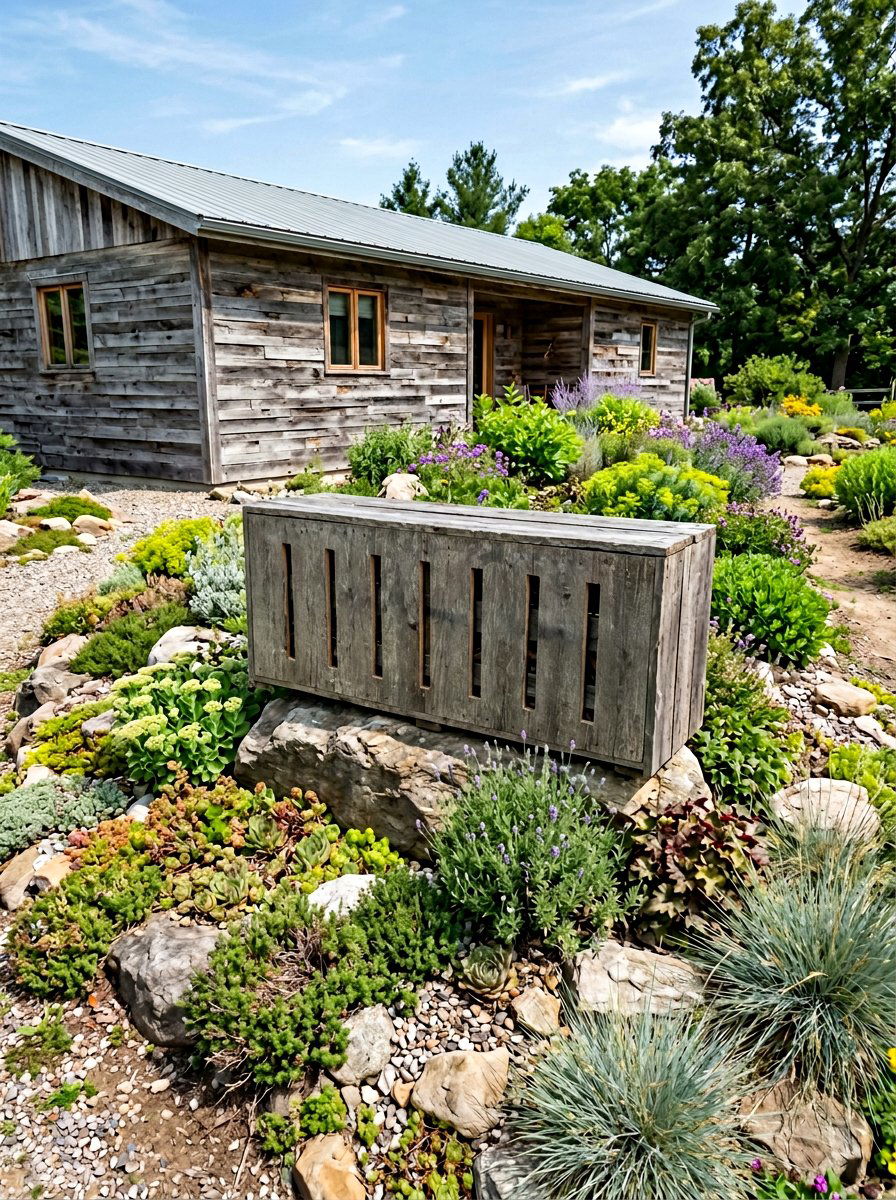
The wide slotted butterfly habitat features broader vertical openings than a traditional house, allowing larger species like Swallowtails to enter more easily. When constructing this from pallet planks, you can space the slats a bit wider while still maintaining a safe and enclosed environment. This design is often shorter and wider than the tall, narrow versions, giving it a unique profile in the garden. It works well when placed among lower-growing perennials or tucked under the eaves of a shed. The wider slots also make it easier for you to peek inside and check for visitors without disturbing them. This is a great choice for regions that see a high population of large, colorful butterfly species during the peak season.
16. Perch Peg Butterfly House
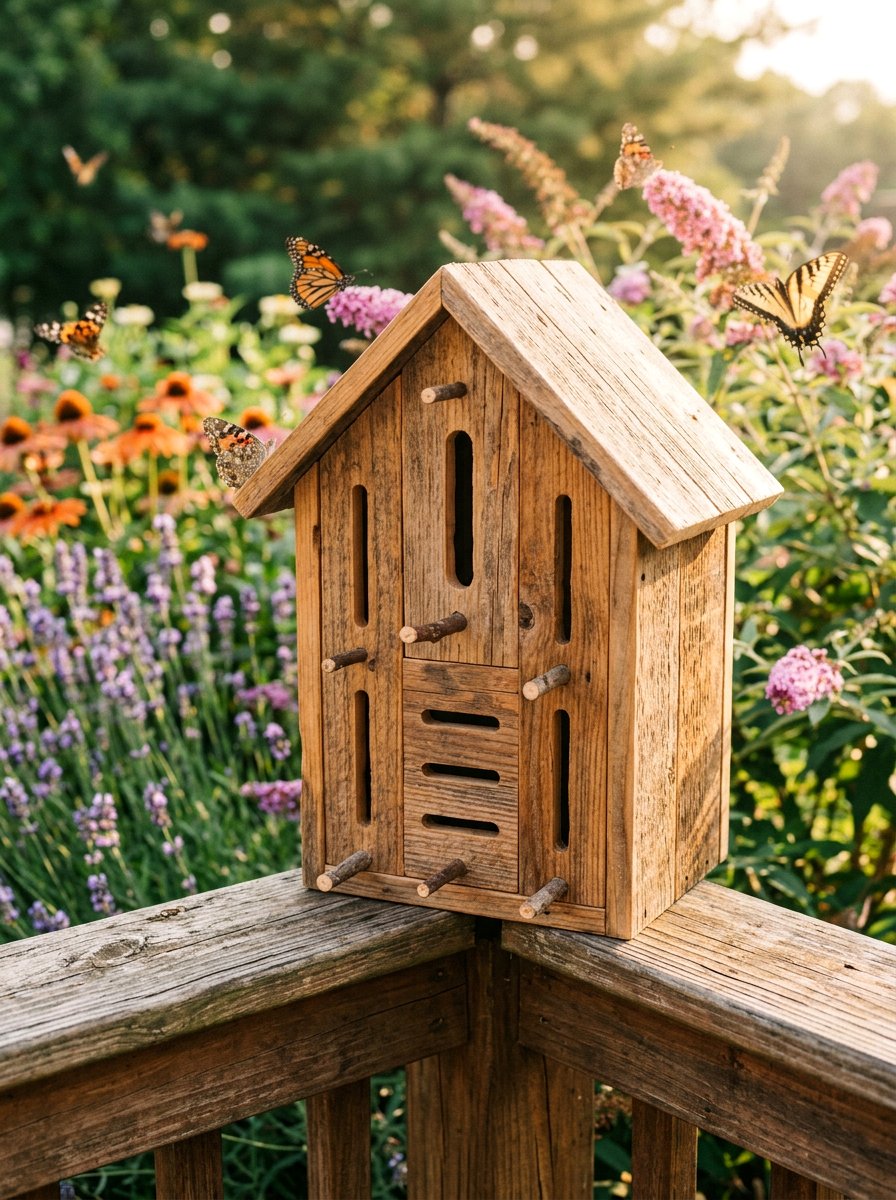
A perch peg butterfly house includes small wooden dowels or twigs sticking out from the front, providing a place for butterflies to land before entering the slits. You can easily incorporate this into a pallet wood design by drilling small holes and inserting scraps of wood or small branches. These perches act like a landing strip, making the house more accessible and inviting for insects that might be tired or looking for a place to sun themselves. The addition of pegs also gives the house a more detailed and birdhouse-like appearance, which many gardeners find very attractive. This design is particularly effective when placed in a spot that receives gentle morning sunlight to warm up the landing area.
17. Double Door Butterfly Shelter
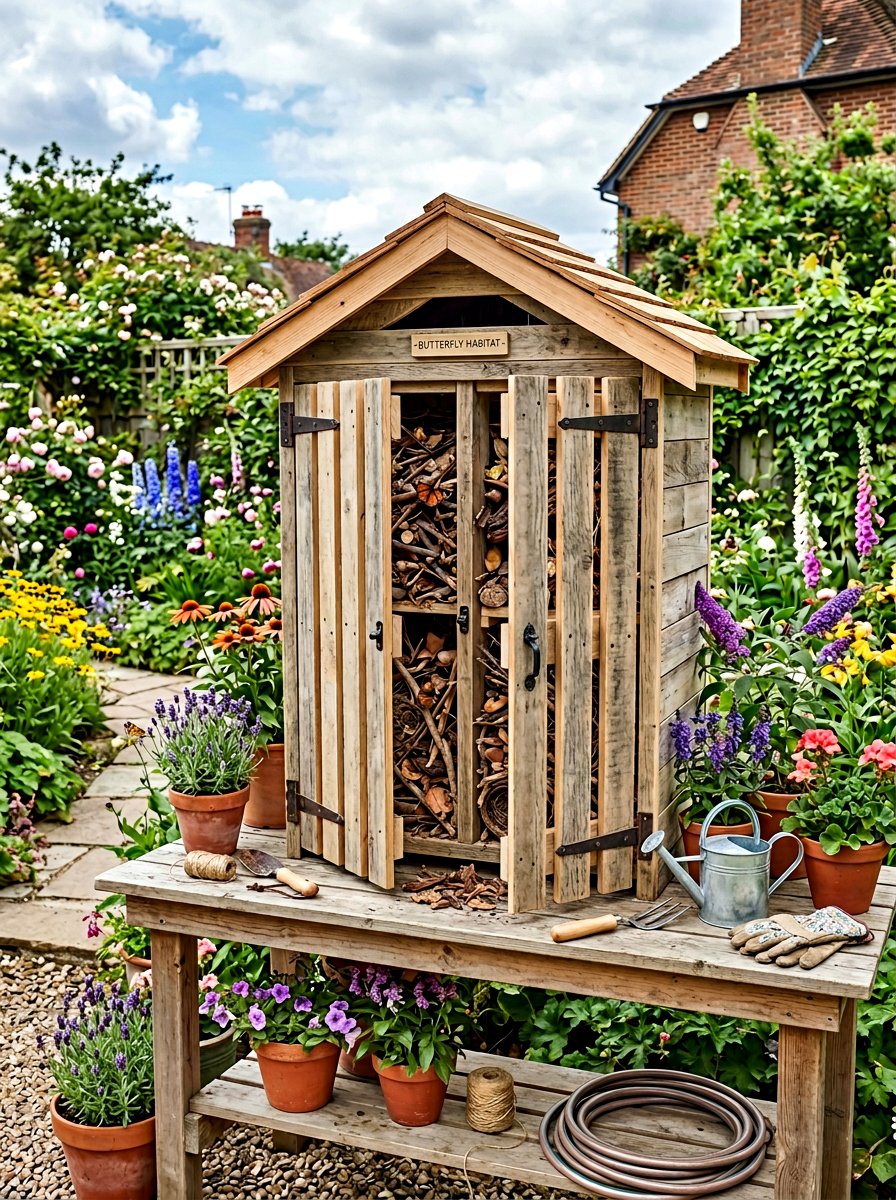
The double door butterfly shelter features a unique construction with two hinged panels on the front or sides, allowing for easy cleaning and maintenance. Building this from pallet wood requires a bit more joinery, but the result is a high-quality, long-lasting garden structure. You can open the doors at the end of the season to clear out any old nesting material or debris, ensuring the house remains a healthy environment year after year. The slits are typically cut into the doors themselves, maintaining the necessary protection for the butterflies. This design is perfect for the organized gardener who likes to keep their outdoor spaces tidy while still providing a essential refuge for the local butterfly population.
18. Teal Distressed Butterfly Sanctuary
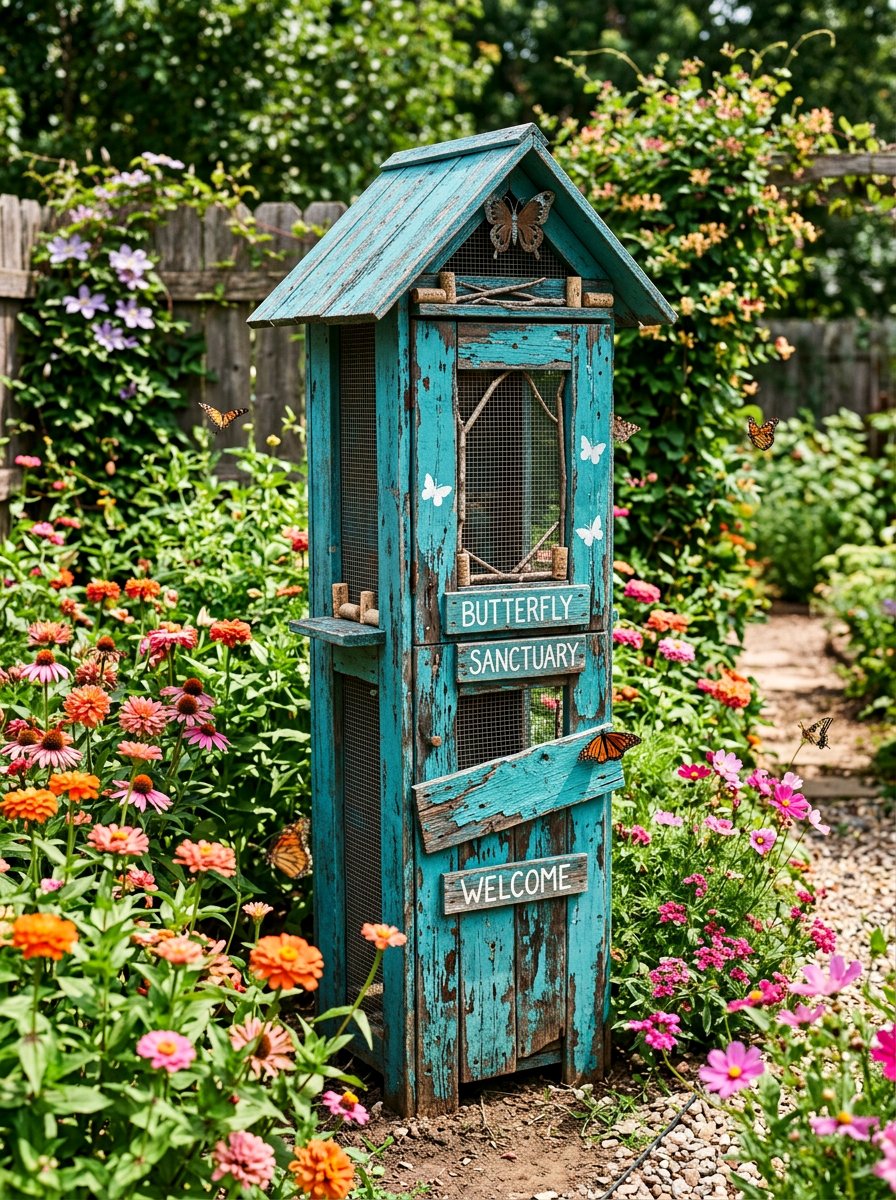
For those who love the "shabby chic" or coastal look, a teal distressed butterfly sanctuary is a stunning addition to the yard. You can achieve this look by painting your pallet butterfly house in a vibrant teal or turquoise color and then lightly sanding the edges to reveal the wood underneath. This creates a weathered, aged appearance that looks like it has been part of the garden for decades. The bright blue-green hue is very attractive to butterflies and looks amazing when paired with pink or orange flowers. This design brings a touch of artistic personality to your backyard and serves as a beautiful backdrop for garden photography, all while protecting your favorite winged visitors.
19. Hanging Pallet Butterfly Box
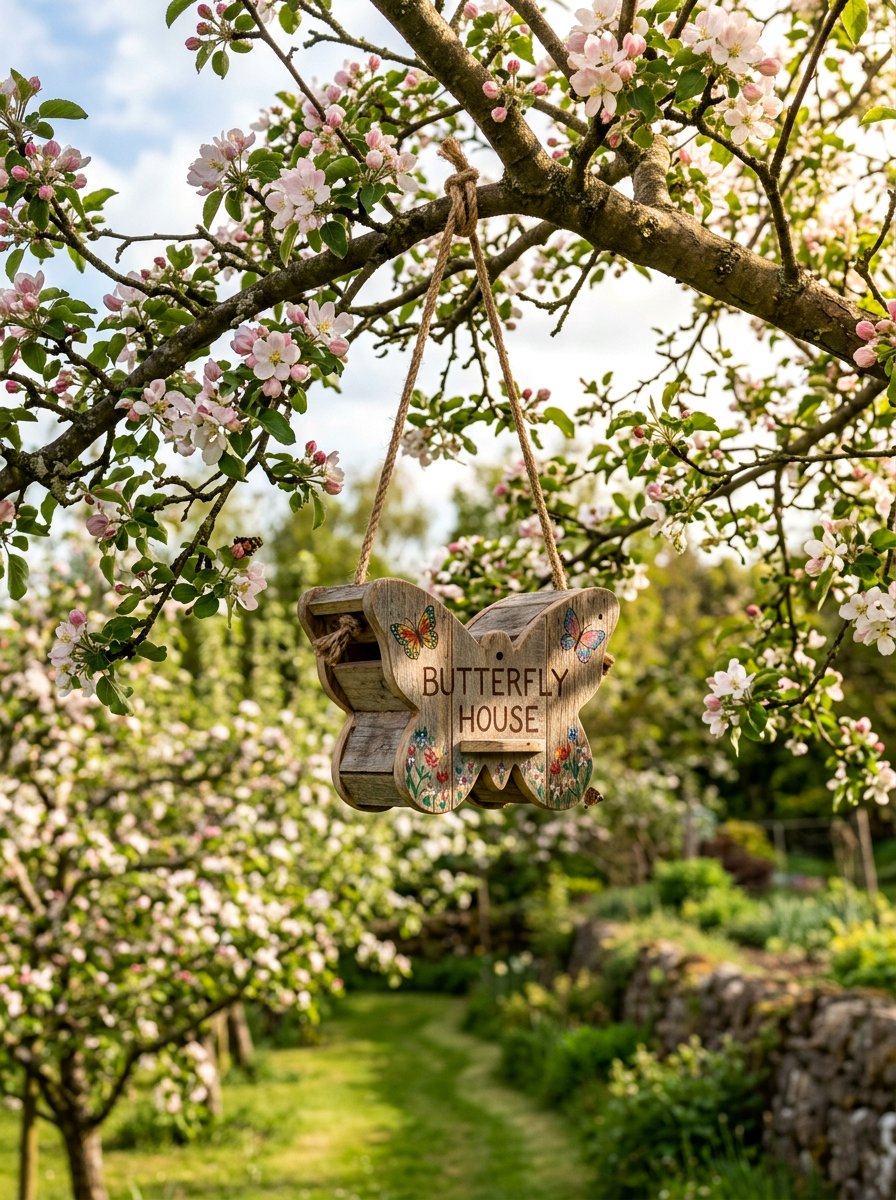
A hanging pallet butterfly box offers a different perspective in the garden, as it can be suspended from a sturdy tree branch or a shepherd 's hook. By using lightweight pallet wood, you can create a secure house that won' t be too heavy for the support structure. Hanging the house allows it to move slightly with the breeze, which some gardeners believe mimics the movement of natural foliage. This design is excellent for keeping the house away from ground predators like cats or squirrels. Make sure to hang it in a relatively sheltered spot so it doesn't swing too violently during high winds. It adds a whimsical and airy feel to your garden landscape.
20. Tin Roof Butterfly House
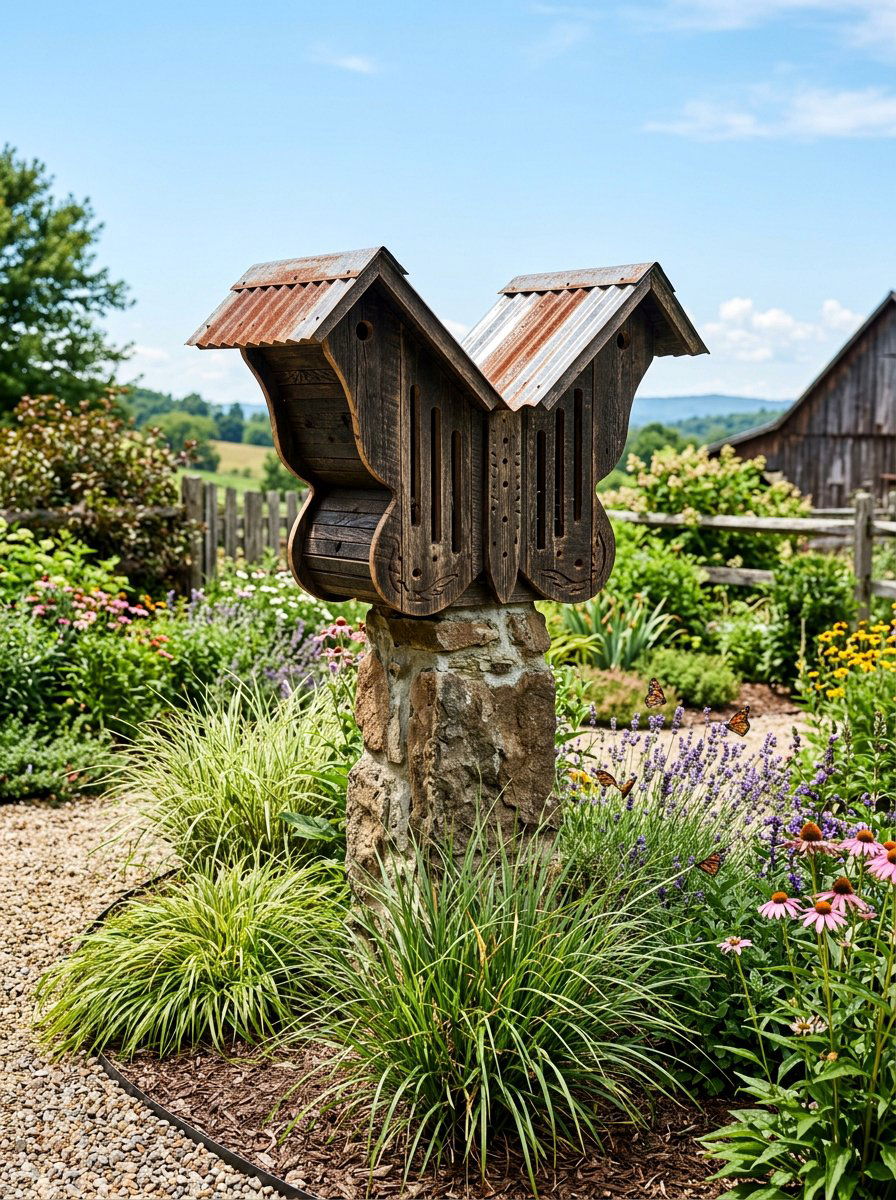
Incorporating a tin roof butterfly house into your garden brings a bit of industrial or rustic farm charm to the space. You can use a small piece of corrugated metal or a flat scrap of tin to cover the top of your pallet wood structure. This not only looks very stylish but provides the ultimate protection against heavy rain and moisture. The metal will develop a beautiful patina over time, especially if it's copper or galvanized steel, adding to the character of the house. This design is incredibly durable and is perfect for gardens in climates that experience a lot of wet weather, as it keeps the interior wood much drier than a standard wooden roof.
21. Floral Painted Butterfly Shelter
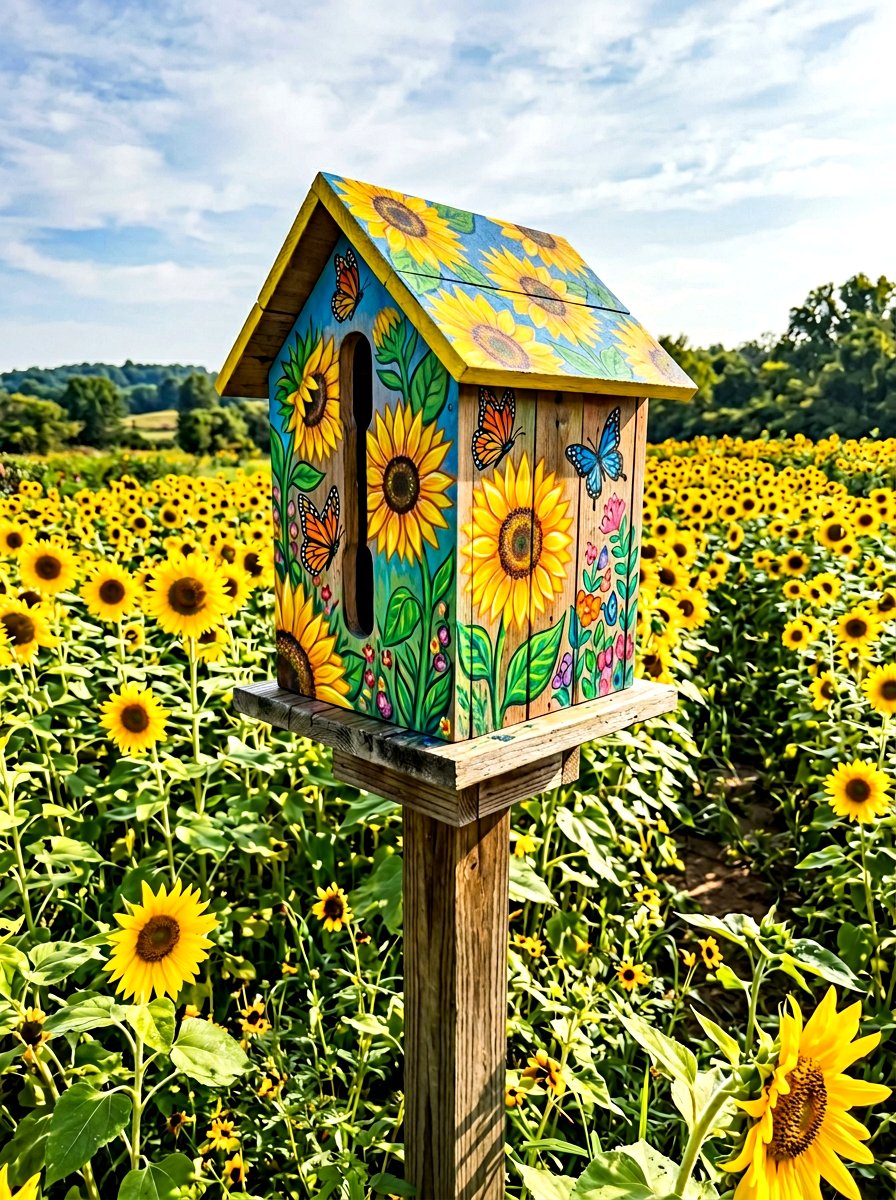
A floral painted butterfly shelter is a lovely way to blend your butterfly house into the surrounding flower beds. By painting delicate vine, leaf, or flower motifs onto the pallet wood, you create a piece of functional art that celebrates the beauty of nature. You can match the painted flowers to the actual species growing in your garden for a coordinated and thoughtful look. This design is very popular on Pinterest because it is highly photogenic and shows a lot of creative effort. It makes the butterfly house feel like a centerpiece of the garden, drawing the eye and providing a safe, beautiful home for the insects that make the garden so vibrant and alive.
22. Narrow Vertical Butterfly Home
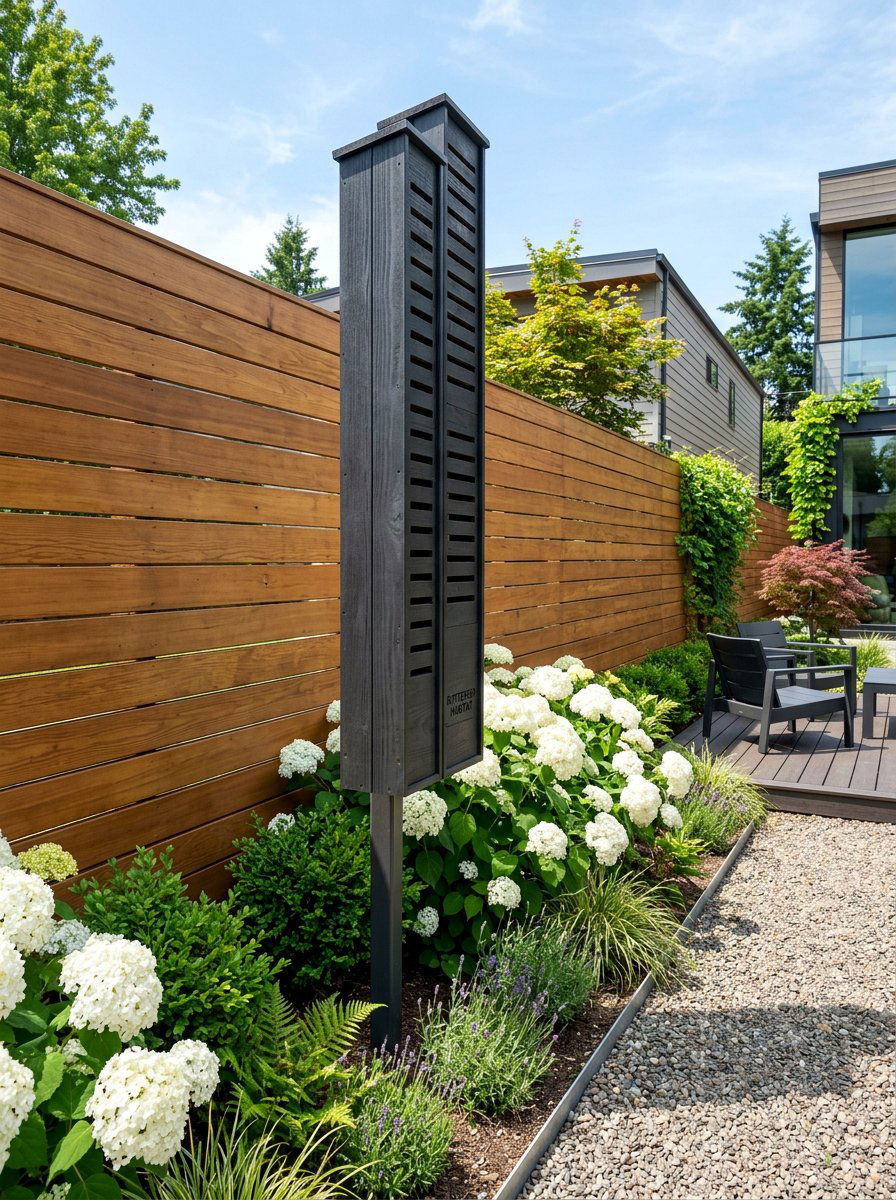
The narrow vertical butterfly home is the quintessential design that most people recognize, featuring a very tall and slim profile. When built from pallet wood, it has a sturdy and substantial feel despite its slender shape. This design is specifically intended to fit into tight spaces, such as between two large shrubs or in a narrow garden bed against a fence. The height of the box provides plenty of vertical space inside for butterflies to find their preferred resting spot. Its simple, sleek lines make it a versatile choice that fits into almost any garden style, from traditional to modern. It's a highly effective design that has been a favorite among butterfly enthusiasts for many years.
23. Wildflower Meadow Butterfly Box
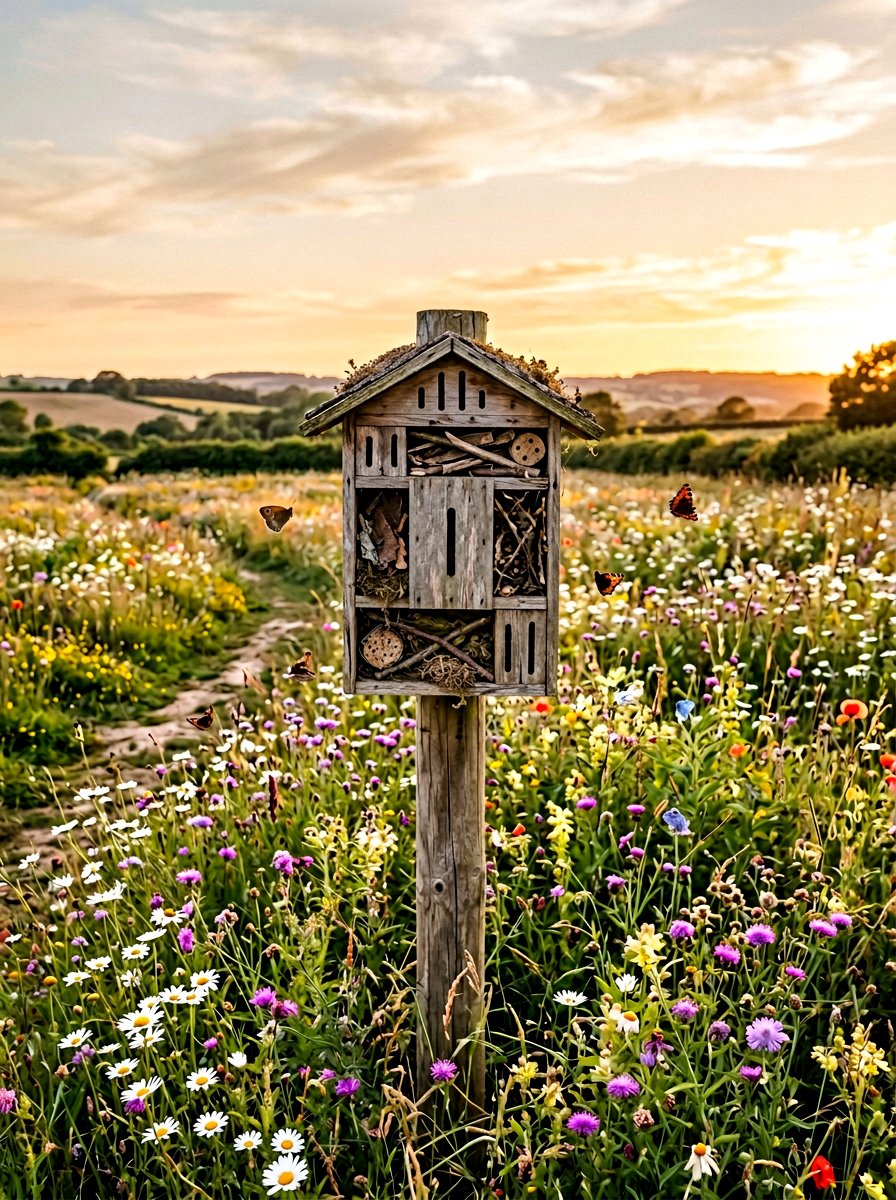
Placing a butterfly house in a wildflower meadow butterfly box setting is the best way to ensure it gets used by local pollinators. This design is all about the context — mounting a simple, sturdy pallet house on a tall post in the middle of a diverse wildflower patch. The surrounding native plants provide a constant source of nectar, making the house a convenient and logical place for butterflies to seek shelter. The pallet wood can be left completely natural to blend in with the dried grasses and stems of the meadow. This setup supports the entire lifecycle of the butterfly, from the food they eat as caterpillars to the nectar they drink as adults and the shelter they need at night.
24. Modern Wood Butterfly Sanctuary
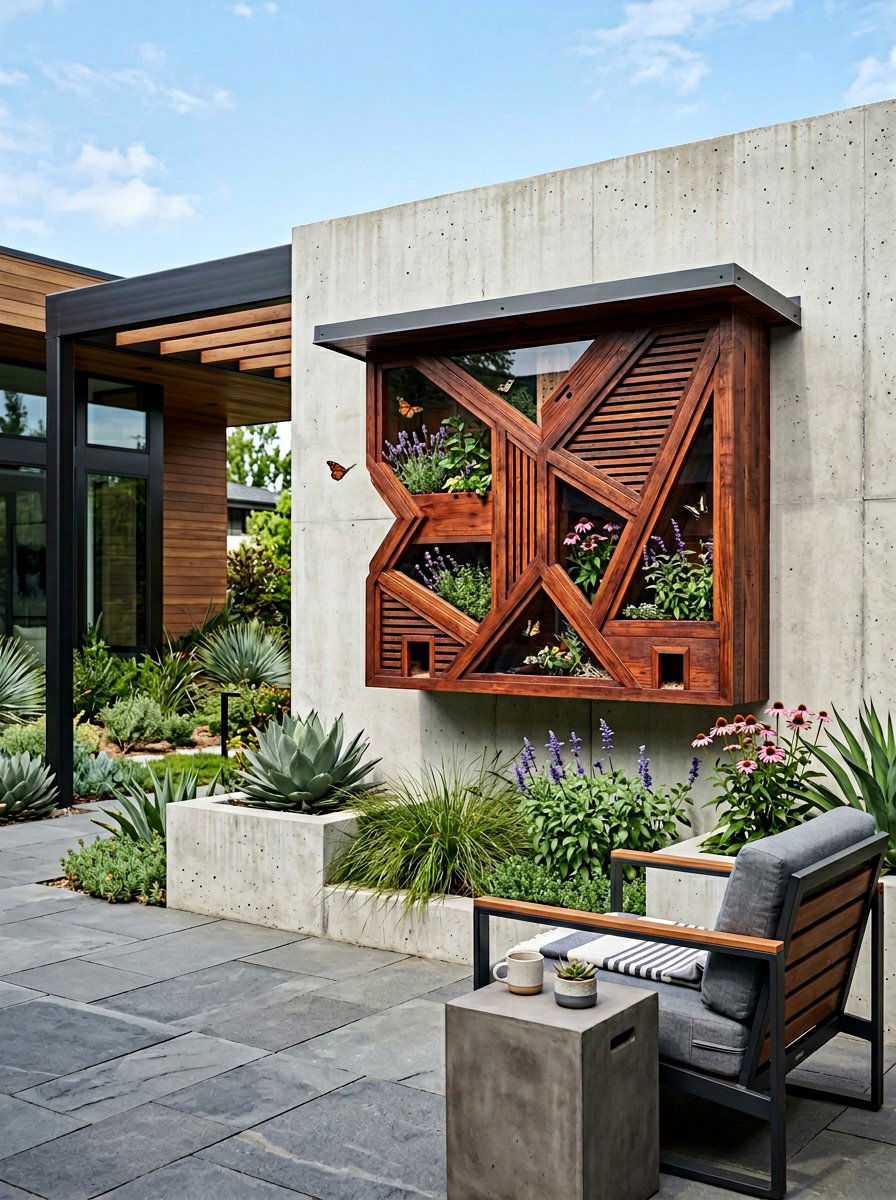
A modern wood butterfly sanctuary uses the clean, straight lines of pallet boards to create a minimalist and architectural look. This design often features asymmetrical shapes, flat roofs, and hidden seams, giving it a sophisticated appearance that complements modern home designs. You can stain the pallet wood a dark ebony or a rich walnut color to make it look like high-end designer outdoor decor. The vertical slits are often integrated into the design in a way that looks like a decorative pattern. This approach proves that you don't have to sacrifice style to be environmentally conscious and support local wildlife, making it a perfect addition to a sleek, contemporary backyard or patio space.
25. Oversized Pallet Butterfly House
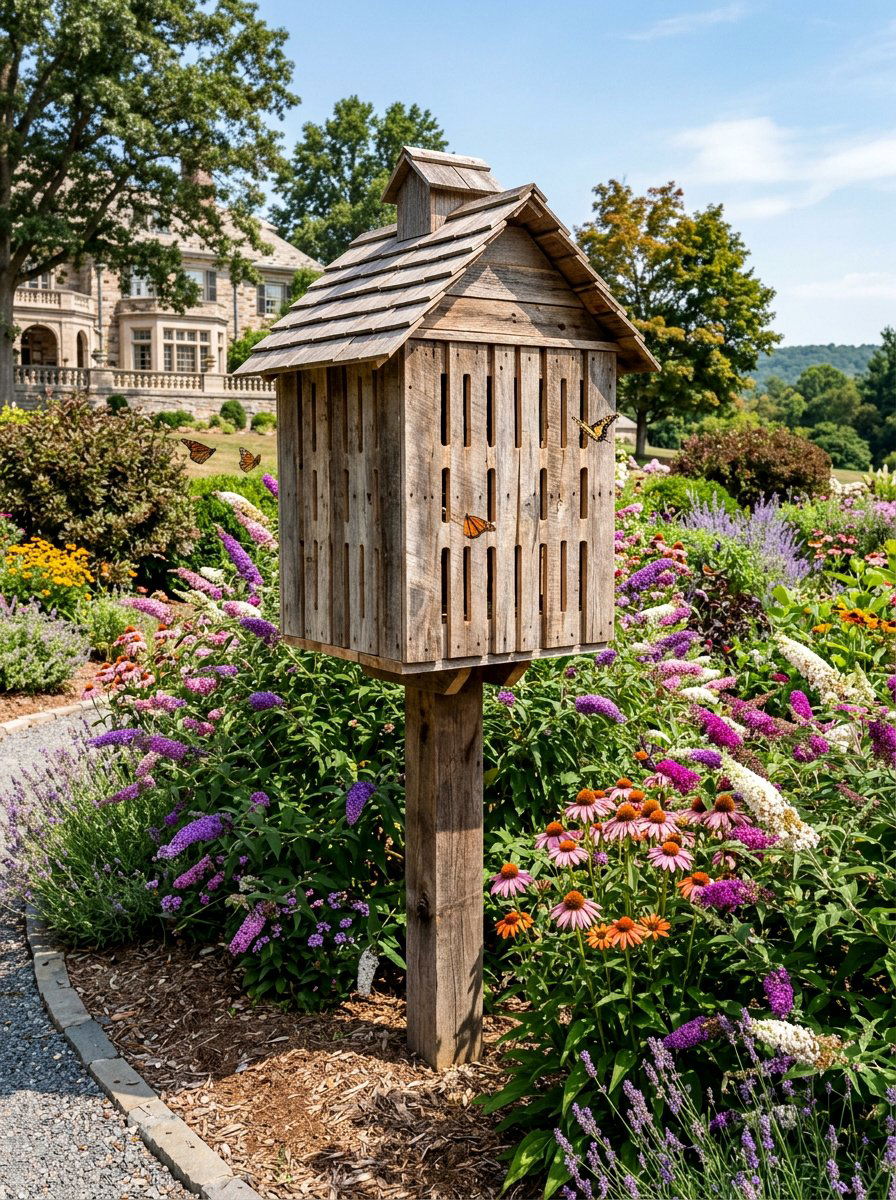
For those who want to make a big impact, an oversized pallet butterfly house is a grand statement piece for the garden. Using the larger sections of a pallet, you can build a house that is significantly taller and wider than the standard size. This allows for dozens of vertical slits and a large interior volume that can accommodate many butterflies during the peak of the season. An oversized house becomes a major architectural element in your landscape design, similar to a trellis or a large garden statue. It shows a serious commitment to pollinator conservation and provides a massive, safe refuge that will attract a huge variety of butterfly species to your property.
Conclusion:
Building a butterfly house from pallets is more than just a fun weekend DIY project for your home. It represents a commitment to supporting your local ecosystem and providing a safe haven for vital pollinators that keep our gardens blooming beautifully. Whether you choose a bright, colorful design or a more natural, rustic look, these structures add character and charm to any outdoor space. Remember to place your new butterfly home in a sheltered yet sunny location to ensure it gets plenty of visitors throughout the spring and summer. By using reclaimed materials, you are also practicing sustainability, which makes the presence of these beautiful winged creatures even more rewarding to witness in your very own backyard paradise.
Related DIY Ideas to Try: