
Building a mud kitchen from recycled pallets is a fantastic way to encourage outdoor sensory play for children while practicing sustainability in your own backyard. These DIY projects transform simple wooden crates into functional play spaces where kids can explore nature, develop fine motor skills, and engage in imaginative role-playing activities. By using affordable materials, you can create a durable and weather-resistant station that withstands years of messy fun. Mud kitchens provide a dedicated area for mixing, pouring, and creating, which keeps the rest of your garden tidy. This type of play is essential for early childhood development because it fosters creativity and a love for the outdoors through hands-on learning experiences.
1. Simple Wooden Mud Kitchen
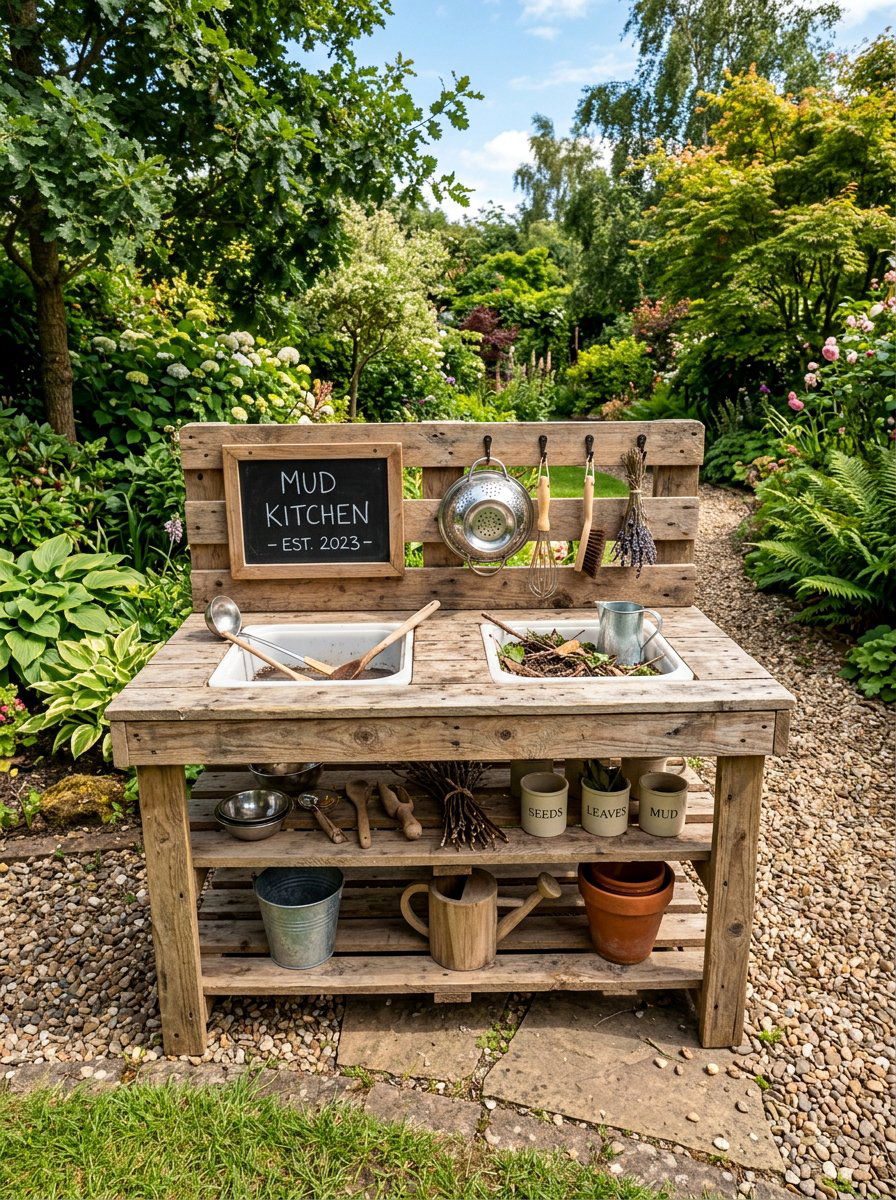
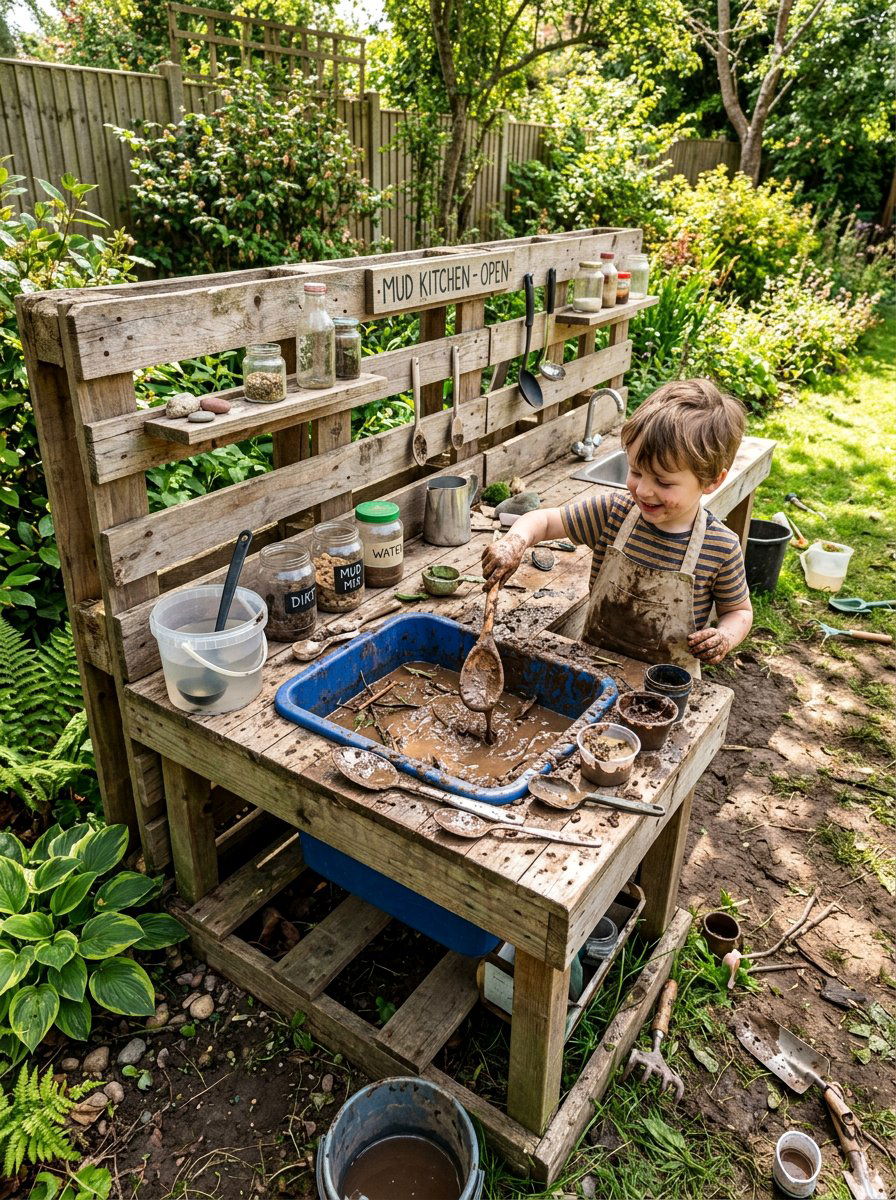
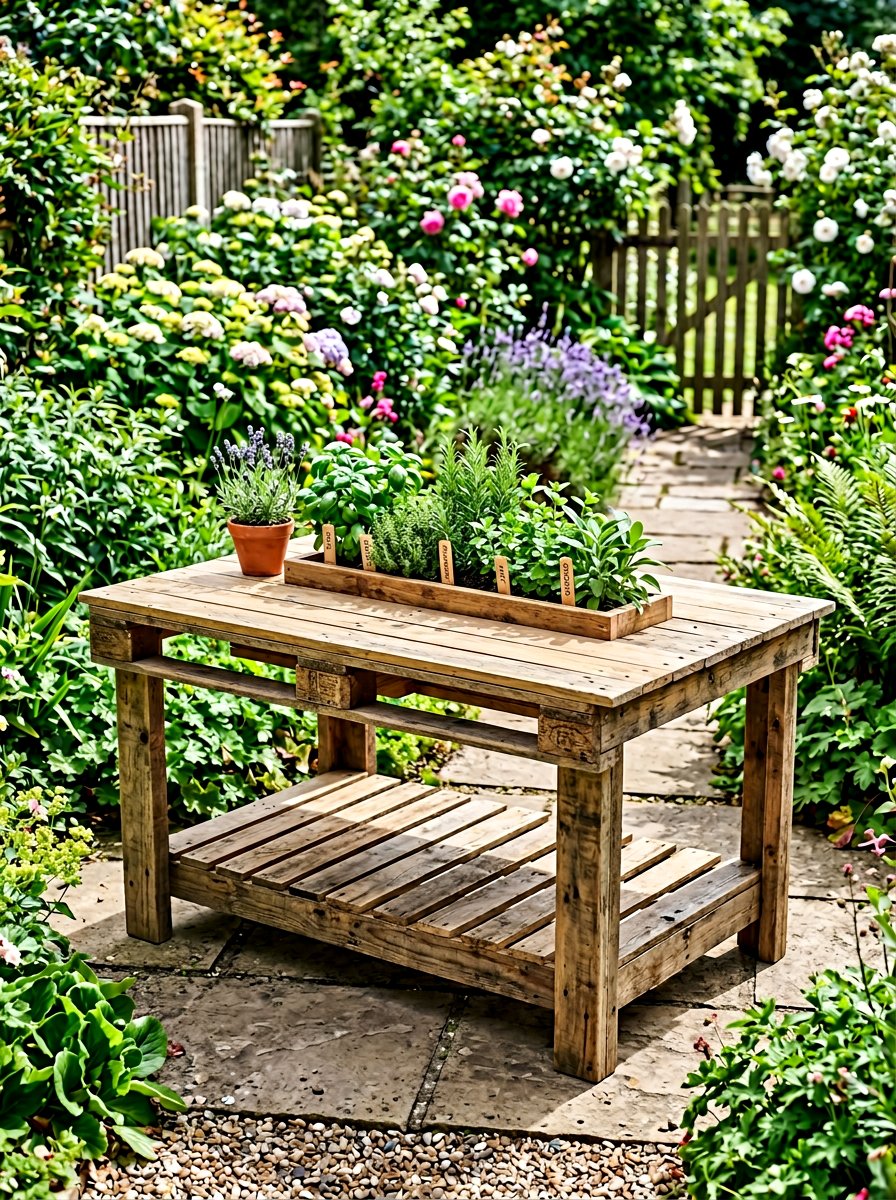
A simple wooden mud kitchen made from recycled pallets offers a wonderful way to introduce sensory play into your backyard. These structures are sturdy and cost-effective for families who want to encourage outdoor exploration without spending much money. You can leave the wood in its natural state for a rustic look that blends perfectly with garden greenery. Children love the tactile feel of the rough-sawn timber while they mix dirt and water together. This basic setup usually includes a flat countertop and a few lower shelves for storing pots and pans. It provides a dedicated space where kids can get messy and use their imaginations freely every day.
2. Pallet Kitchen With Water Pump
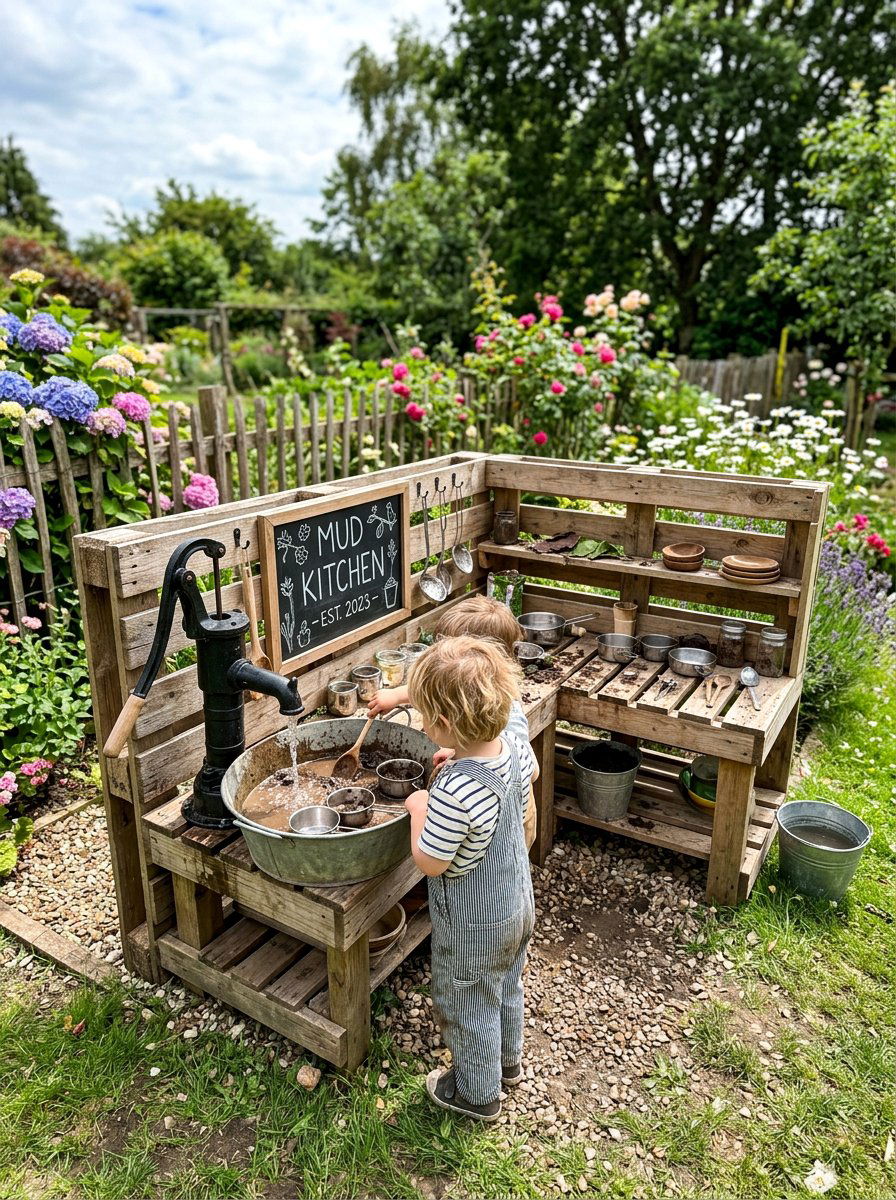
Integrating a manual water pump into a pallet mud kitchen adds an exciting layer of realism to backyard playtime. Kids find great joy in pumping their own water to create the perfect consistency for mud pies. This specific design encourages physical coordination and teaches children about the mechanics of water flow in a fun environment. The pallet frame provides a strong base to support the weight of a water container or a connected hose system. You can build a small basin area where the water collects for splashing and rinsing. It transforms a standard play area into a fully functional sensory laboratory for young explorers to enjoy.
3. Double Sided Mud Kitchen
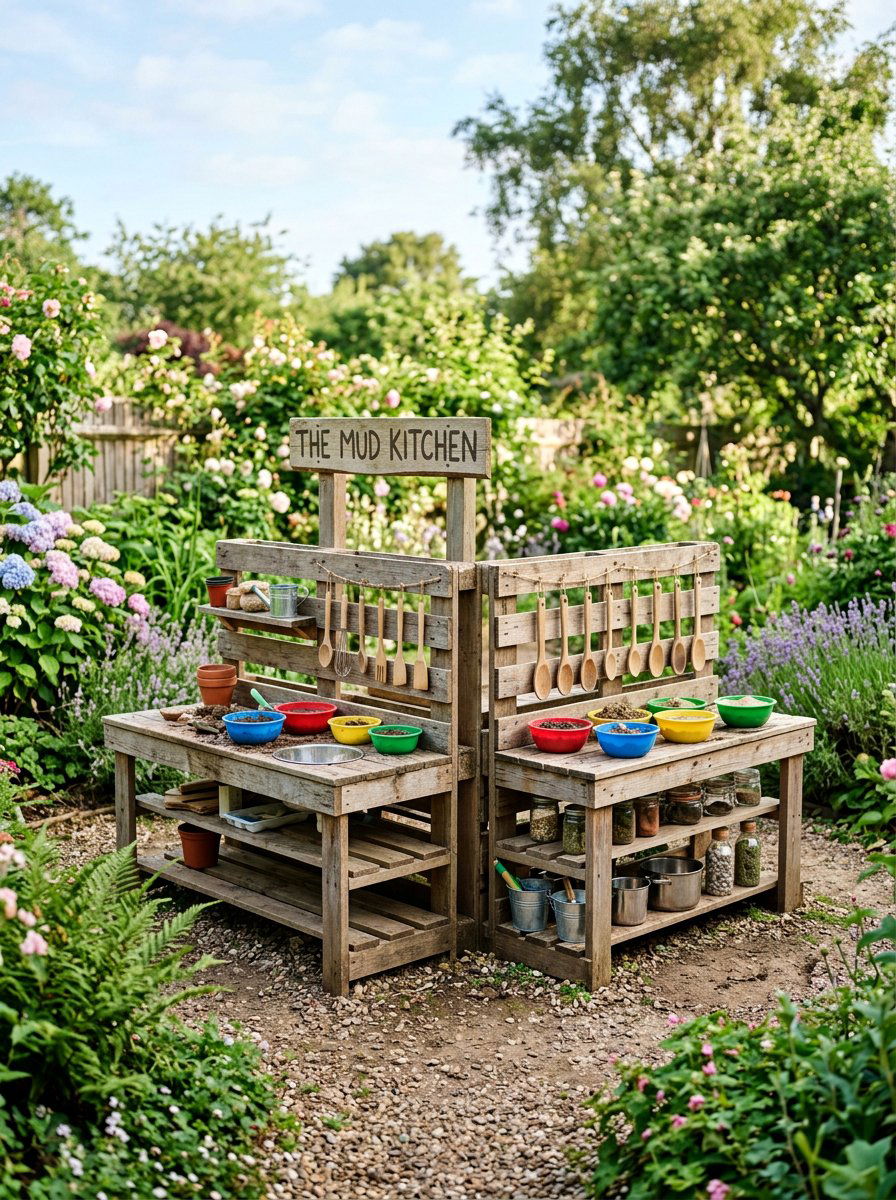
A double sided mud kitchen is the perfect solution for families with multiple children or frequent playdates in the garden. This design uses pallets to create a central island where kids can work on both sides simultaneously. It promotes social interaction and cooperation as children share materials and collaborate on their messy recipes. Each side can be equipped with its own sink and prep area to minimize arguments over space. The open structure allows parents to supervise play from any angle in the yard. This layout maximizes the use of vertical pallet slats for hanging communal tools like spoons, whisks, and small plastic buckets.
4. Mud Kitchen With Chalkboard
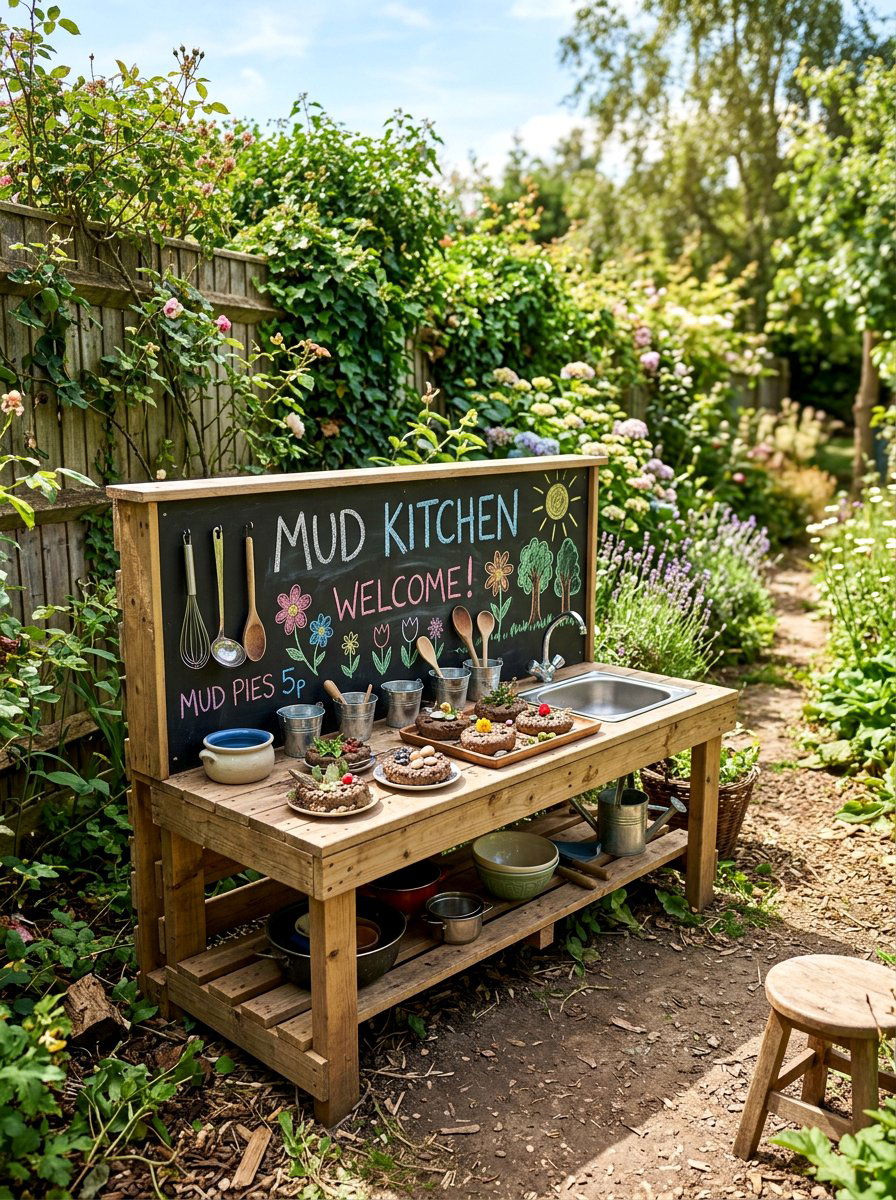
Adding a chalkboard backsplash to a pallet mud kitchen provides a space for children to practice writing and drawing during play. They can write out daily menus, list the prices of their mud pies, or draw pictures of the plants they find nearby. This feature combines literacy skills with outdoor play in a very natural and engaging way. The dark surface of the chalkboard creates a nice visual contrast against the light wood of the pallets. It is easy to wipe clean after a day of messy fun in the sun. This design detail encourages creative thinking and helps turn a simple play station into a themed cafe.
5. Rustic Pallet Play Station
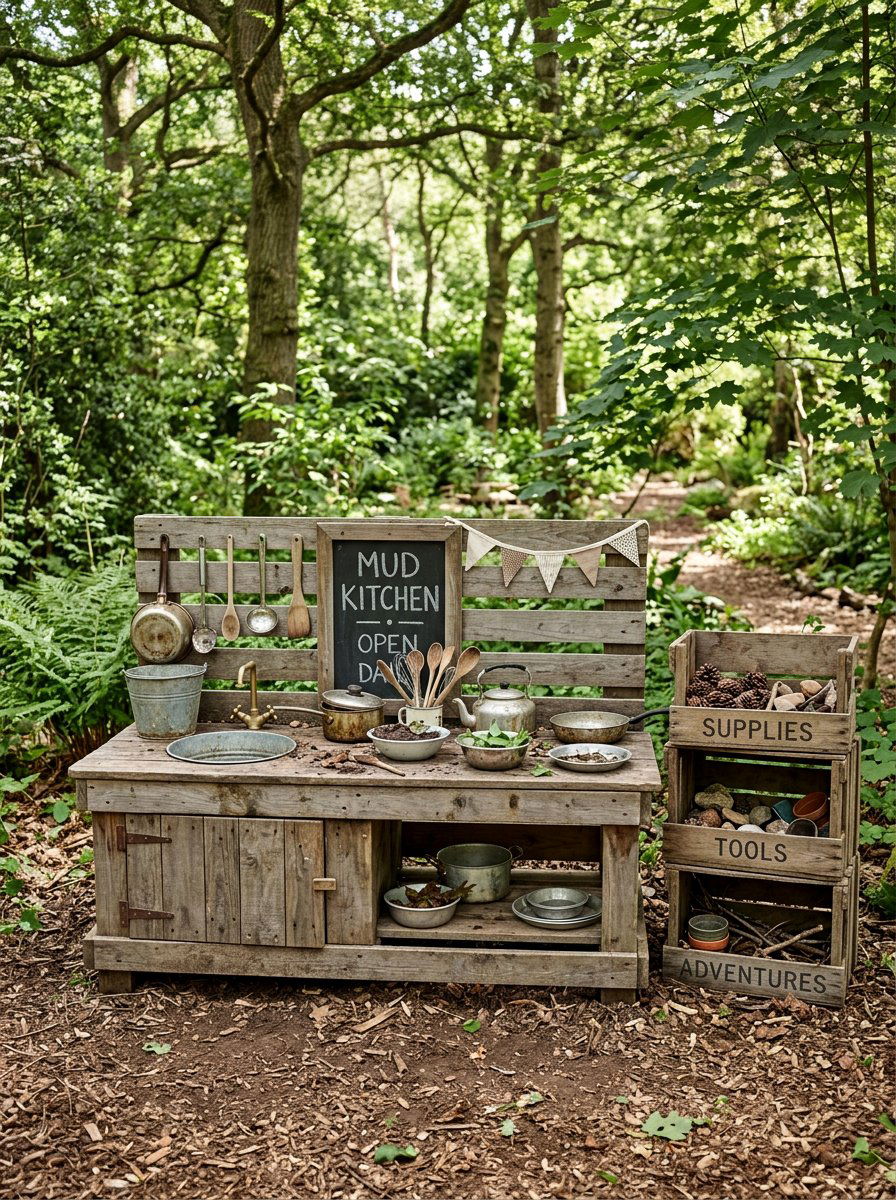
A rustic pallet play station emphasizes the raw and unrefined beauty of reclaimed wood in an outdoor setting. This design often features uneven edges and visible wood grain that give the kitchen a charming farmhouse aesthetic. It looks beautiful tucked away under a large tree or nestled near a flower bed. You can use old crates as extra storage bins to enhance the vintage feel of the space. The sturdy construction ensures it can handle heavy buckets of soil and water without wobbling. Adding a few antique kitchen items like metal colanders or old tin mugs completes the nostalgic look for your children’s play area.
6. Mini Mud Kitchen For Small Garden
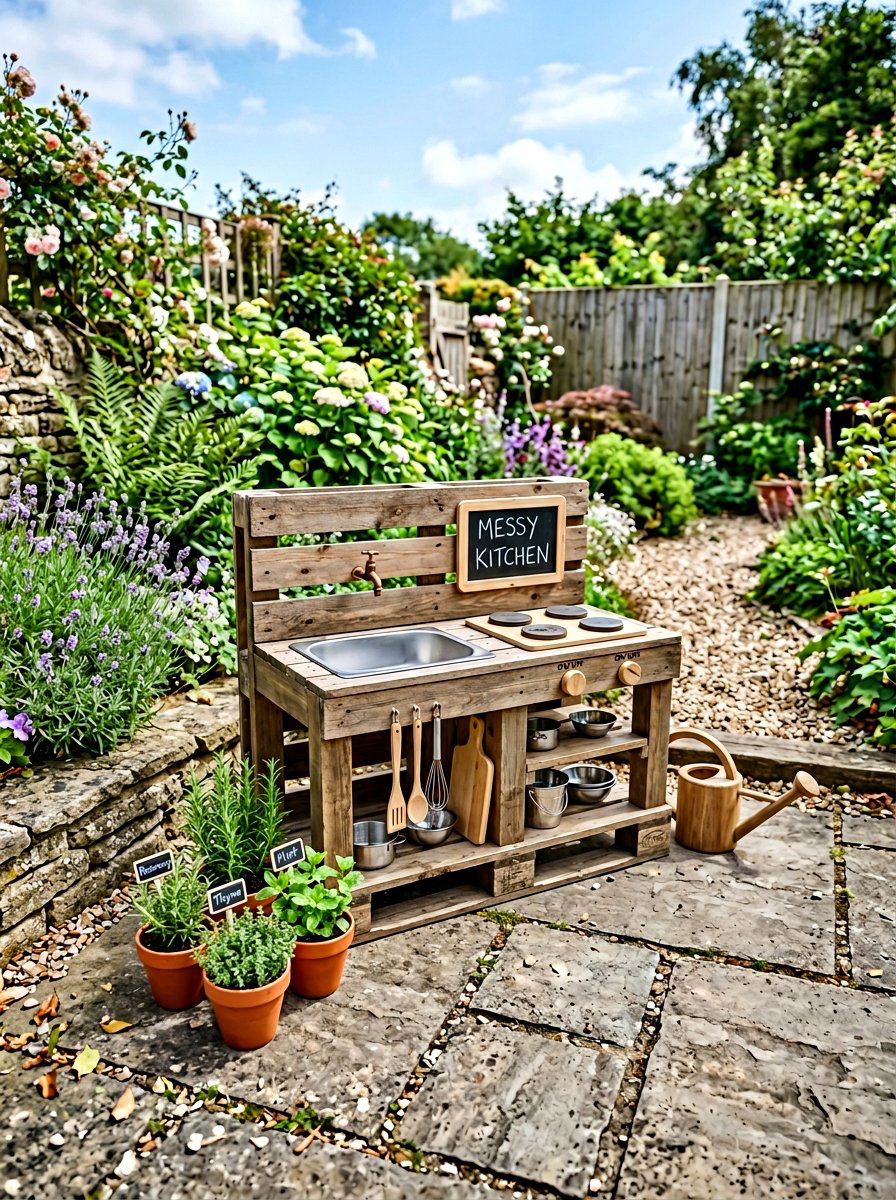
A mini mud kitchen for a small garden proves that you do not need a massive backyard to enjoy outdoor play. By using just one or two pallets, you can create a compact station that fits perfectly on a patio or balcony. These smaller units focus on essential features like a single sink basin and a small preparation surface. They are easy to move if you need to clear space for other outdoor activities or gardening projects. Even with a limited footprint, this design provides enough room for a child to engage in deep sensory exploration. It is an efficient way to bring nature play to urban environments.
7. Mud Kitchen With Herb Planter
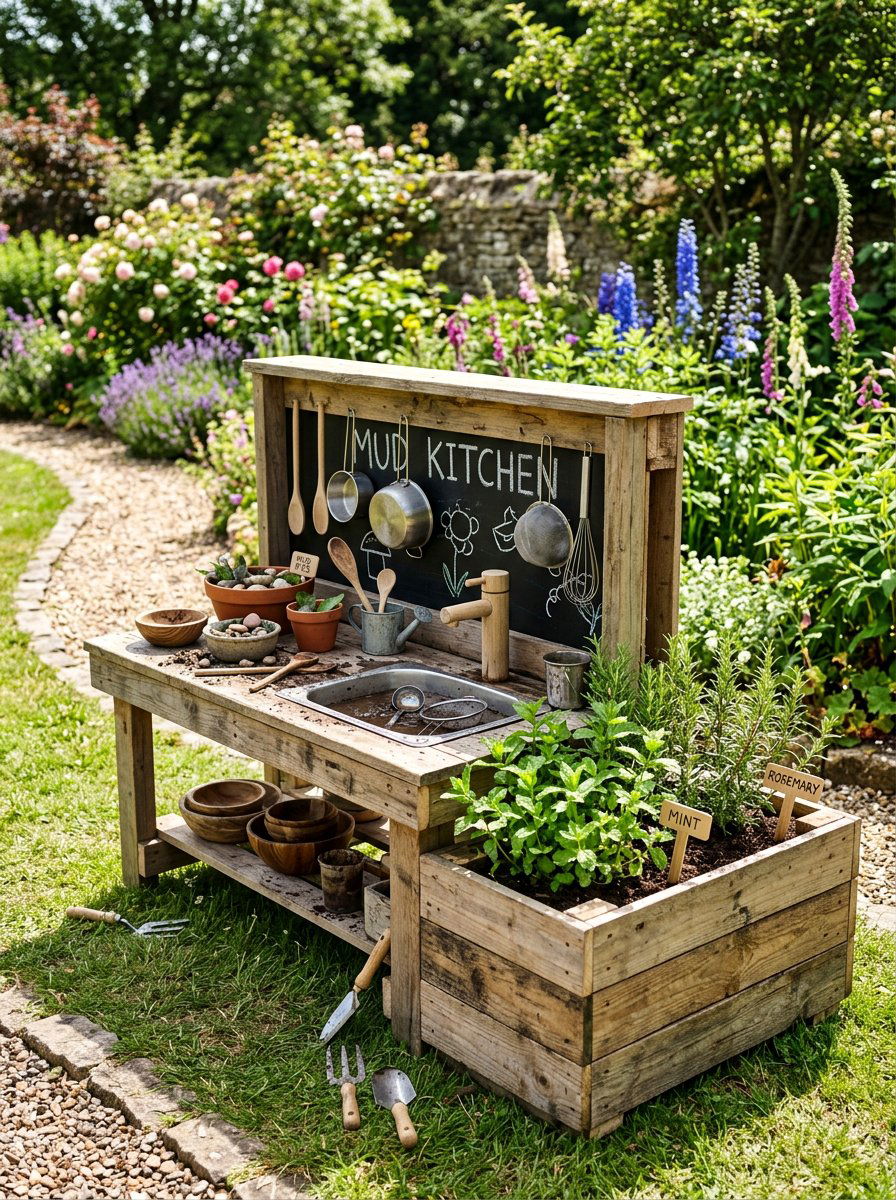
Incorporating a herb planter into a pallet mud kitchen allows children to learn about gardening while they play with mud. You can attach small wooden boxes to the top or sides of the pallet frame to hold fragrant plants like mint or lavender. Kids can pick the leaves and mix them into their mud concoctions for an enhanced sensory experience. This design teaches responsibility as children help water the plants that live on their play station. The greenery adds a pop of color and a fresh scent to the play area. It bridges the gap between traditional gardening and imaginative play for young curious minds.
8. Colorful Painted Mud Kitchen
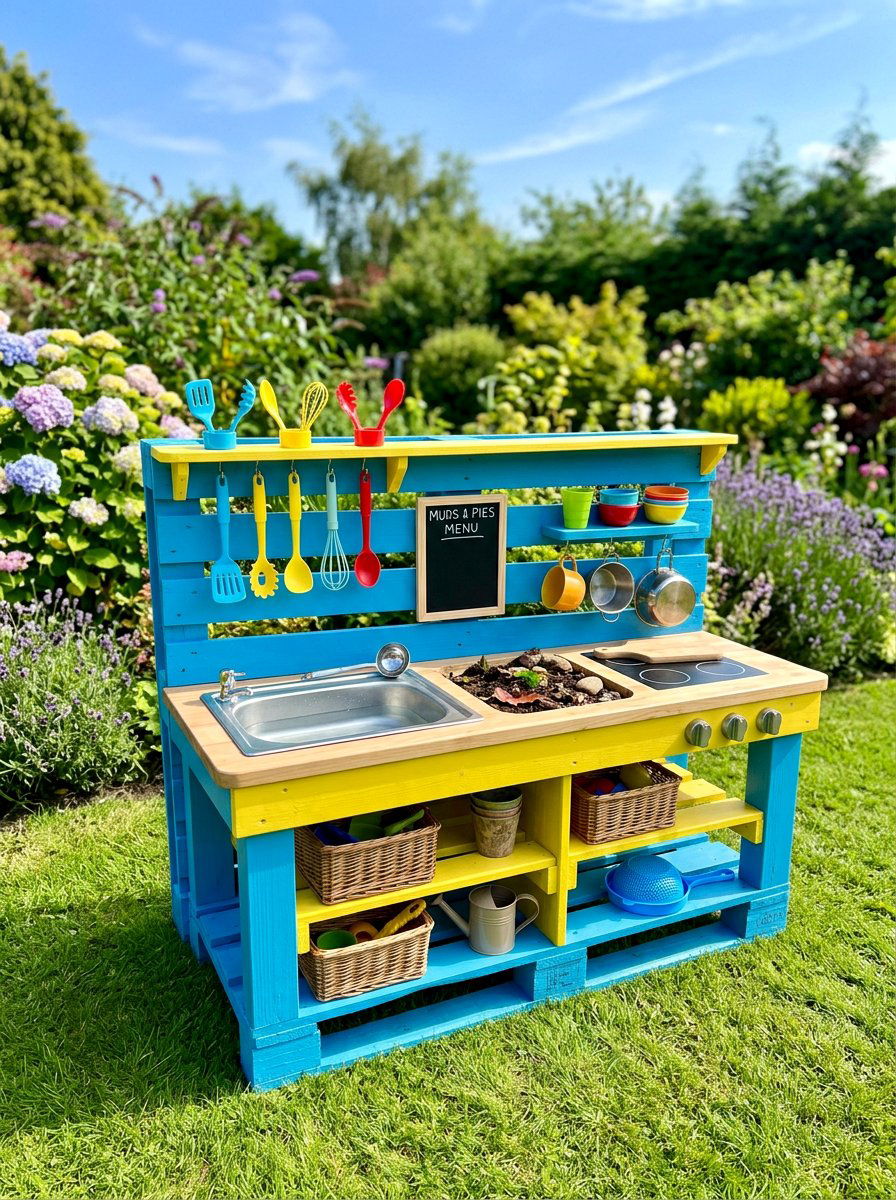
A colorful painted mud kitchen can brighten up any corner of your yard and make the play area feel more inviting. Using weather-resistant exterior paint allows you to customize the pallets in vibrant shades like bright blue, sunny yellow, or soft sage green. You can involve your children in the painting process to give them a sense of ownership over their new play space. Painting also helps protect the wood from moisture and prevents splinters, making the kitchen safer for little hands. A bright color scheme makes the kitchen a focal point in the garden. It creates a cheerful atmosphere that encourages kids to spend more time outdoors.
9. Mud Kitchen With Sink And Tap
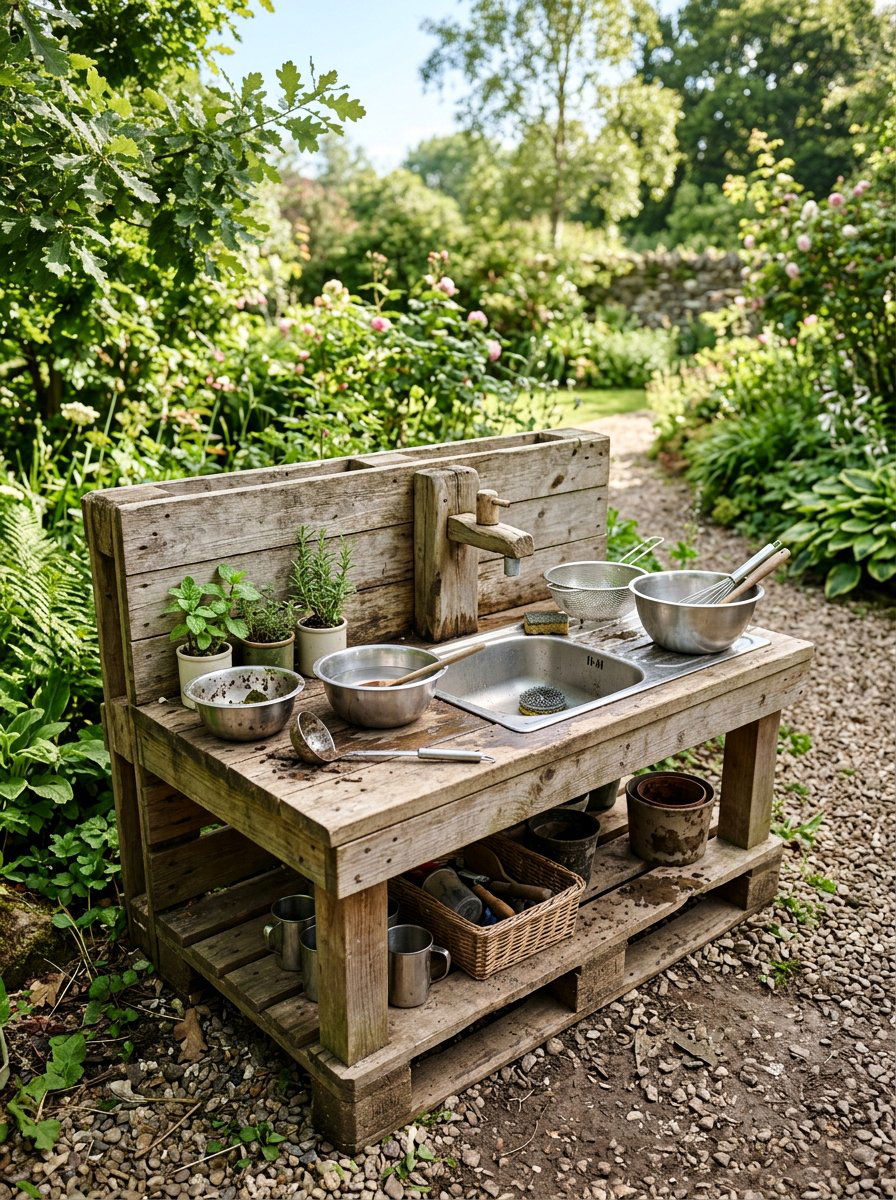
A mud kitchen with a sink and tap provides a realistic experience that mimics a real household kitchen environment. You can repurpose an old stainless steel mixing bowl as the sink by cutting a hole in the pallet countertop. Attaching a non-functional or gravity-fed tap gives children a specific place to focus their water play. This setup helps kids understand the concept of washing up and keeping their workspace clean after a busy session. The metal sink is very easy to spray down with a hose at the end of the day. It adds a professional touch to the DIY pallet structure that kids truly love.
10. Corner Pallet Mud Kitchen
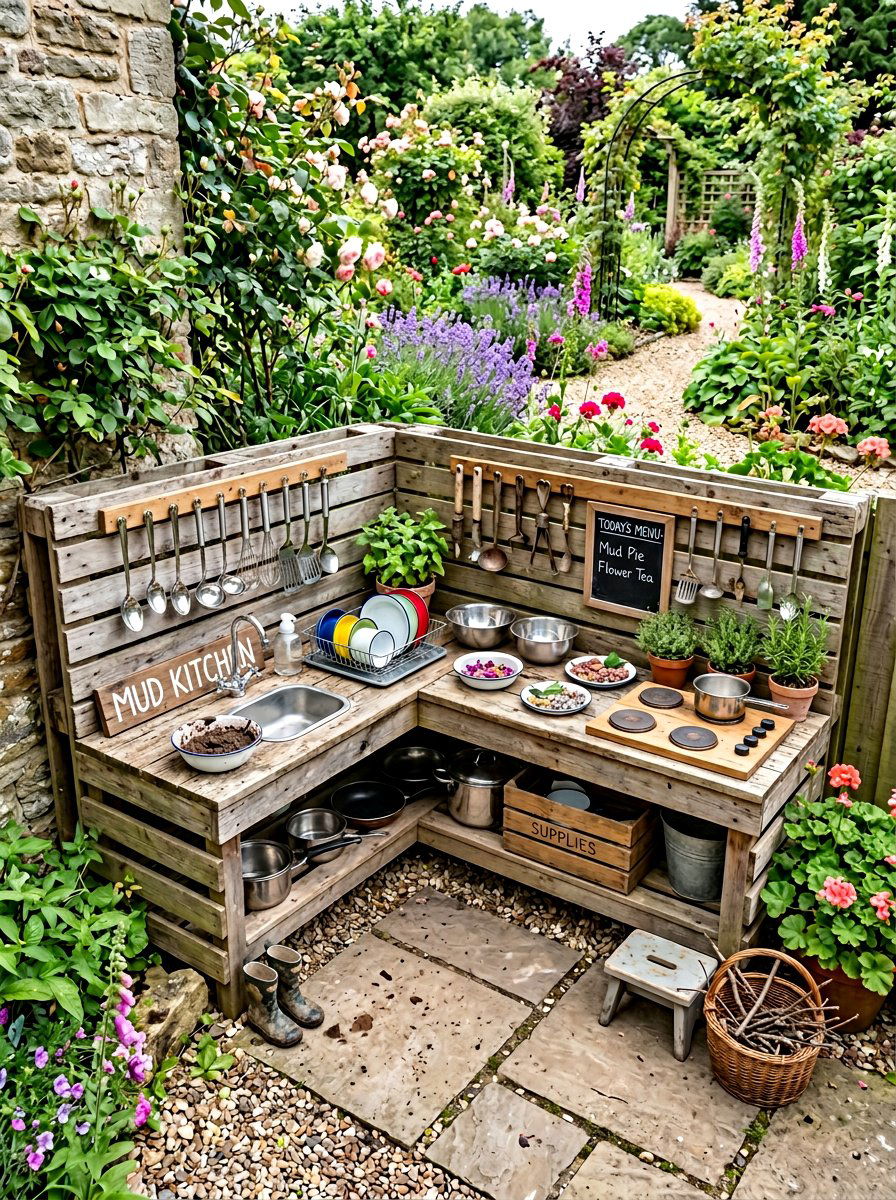
A corner pallet mud kitchen is an excellent way to utilize awkward spaces in your yard that might otherwise go unused. By joining two pallet sections at a right angle, you create a cozy and enclosed play zone for your children. This L-shaped layout offers an expansive workspace for multiple kids to play without bumping into each other. It also provides extra stability as the two sides support each other against a fence or wall. The corner design creates a natural nook that feels like a private little house for young chefs. You can use the corner junction to store larger items like water jugs or bags of soil.
11. Mud Kitchen With Utensil Hooks
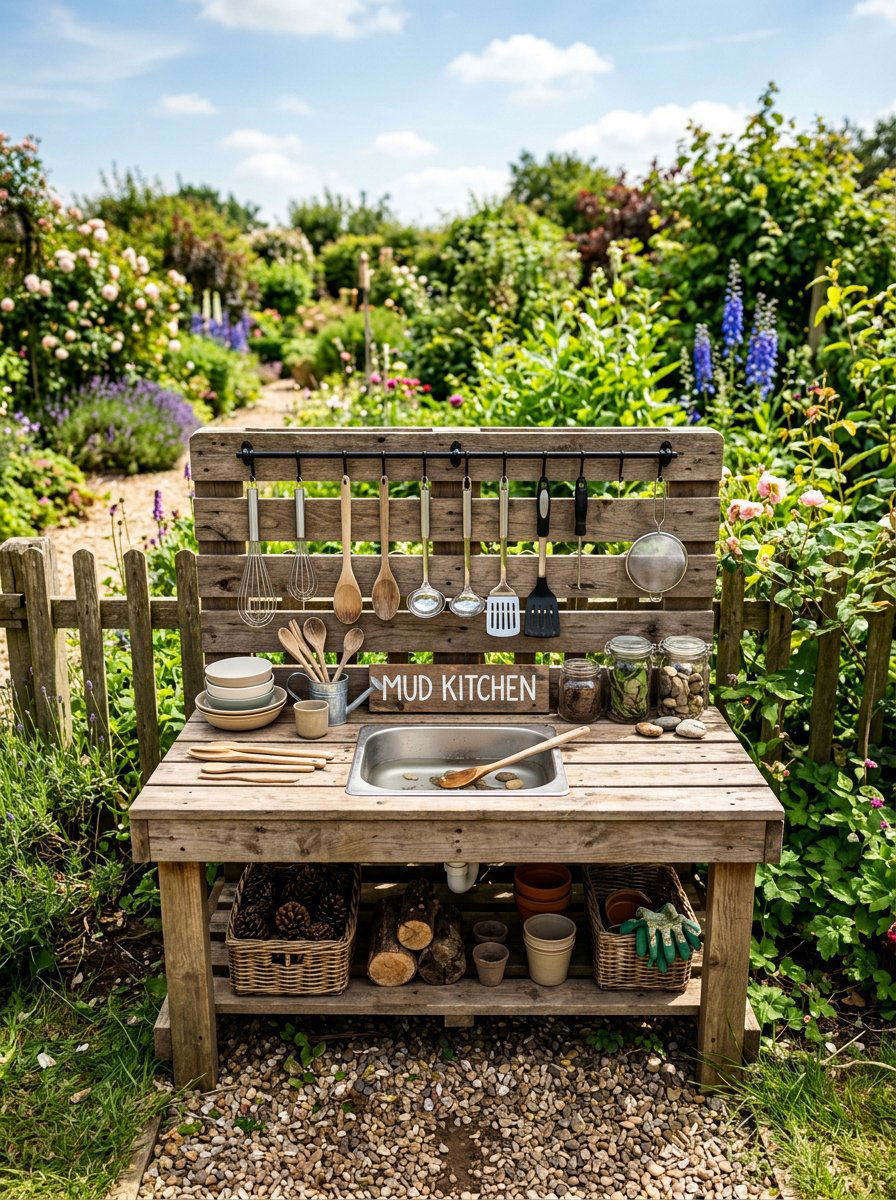
Adding utensil hooks to a pallet mud kitchen keeps the play area organized and ensures that tools are always within reach. You can screw simple metal hooks or even sturdy nails into the vertical slats of the pallet backsplash. Hanging items like wooden spoons, mashers, and measuring cups allows them to air dry quickly after being used in the mud. This setup encourages children to tidy up their workspace once they are finished with their creative cooking projects. It also helps prevent small items from getting lost in the grass or buried in the dirt. An organized kitchen makes the play experience much smoother and more enjoyable.
12. Tall Pallet Kitchen For Older Kids
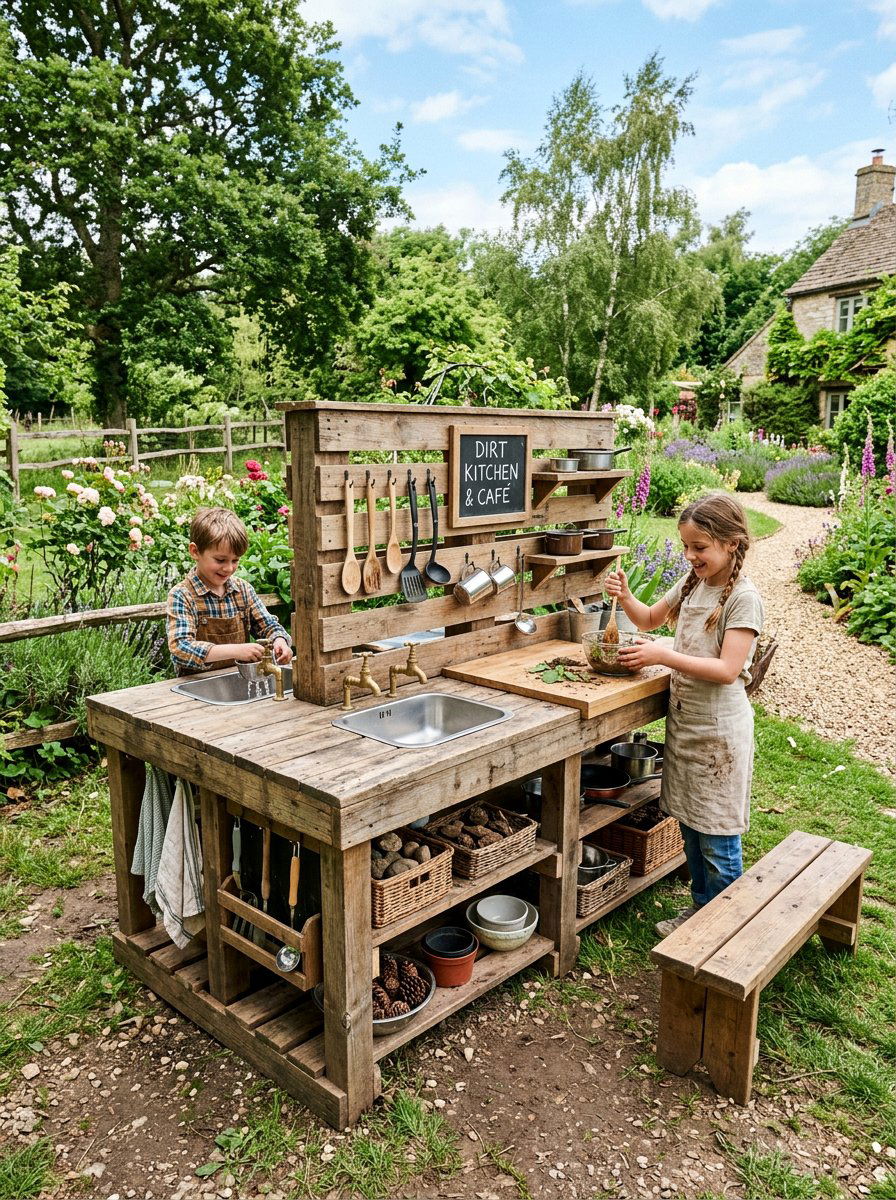
A tall pallet kitchen for older kids ensures that children can continue enjoying sensory play as they grow bigger. By stacking pallets or adding longer legs, you can raise the countertop to a comfortable height for school-aged children. This prevents them from having to hunch over while they work on their mud masterpieces. A larger structure also allows for more complex features like double sinks or extra-long prep counters. Older kids often enjoy more detailed play, so providing a larger surface area supports their evolving needs. It is a great way to keep big siblings involved in outdoor activities alongside their younger brothers or sisters.
13. Mud Kitchen With Magnetic Strip
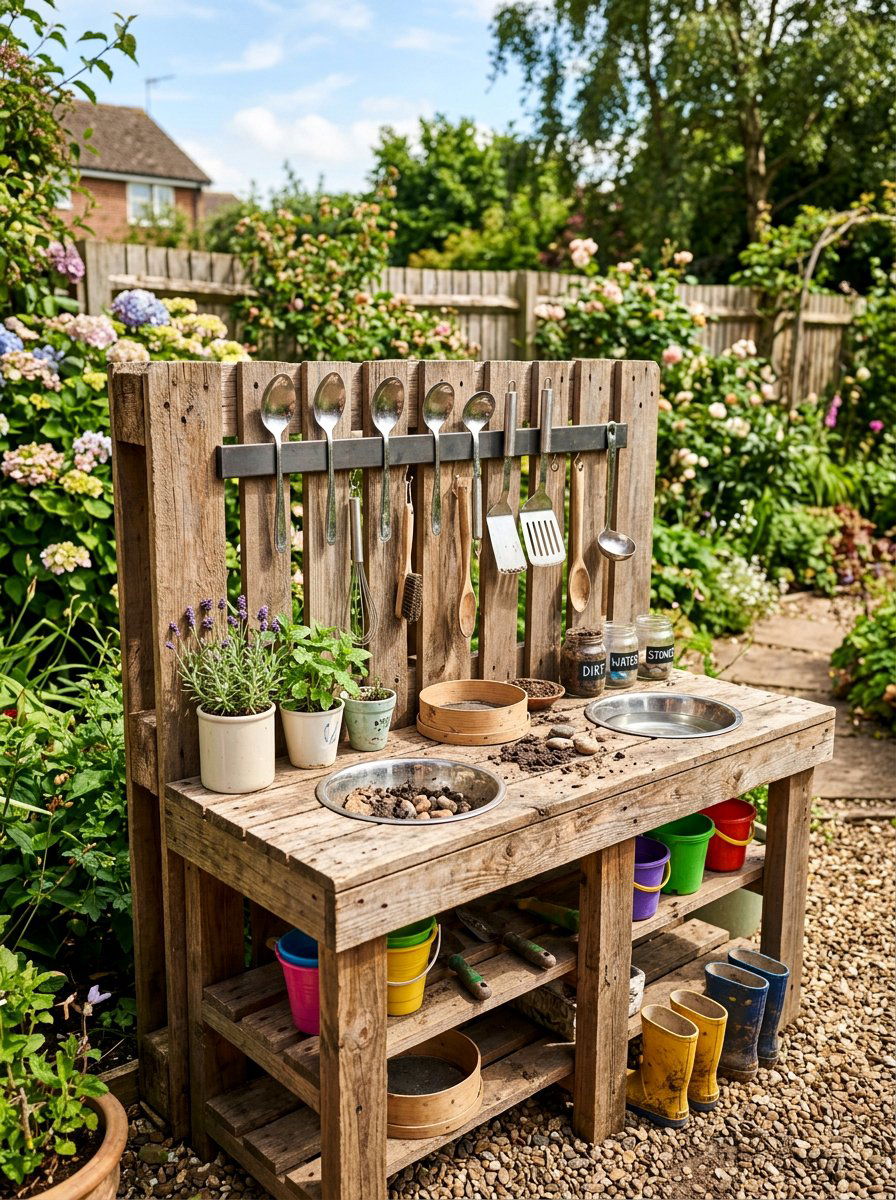
Installing a magnetic strip on a pallet mud kitchen is a modern and clever way to store metal play utensils. You can attach the strip to the backboard of the kitchen where it can securely hold stainless steel spoons and spatulas. This feature is very satisfying for children as they watch their tools "stick" to the wall magically. It keeps the countertop clear for heavy mixing and pouring while keeping sharp or heavy metal items safely out of the dirt. Magnetic storage is also a great way to display a collection of interesting metal finds like old keys or tin lids. It adds a unique educational element to the play station.
14. Folding Pallet Mud Kitchen
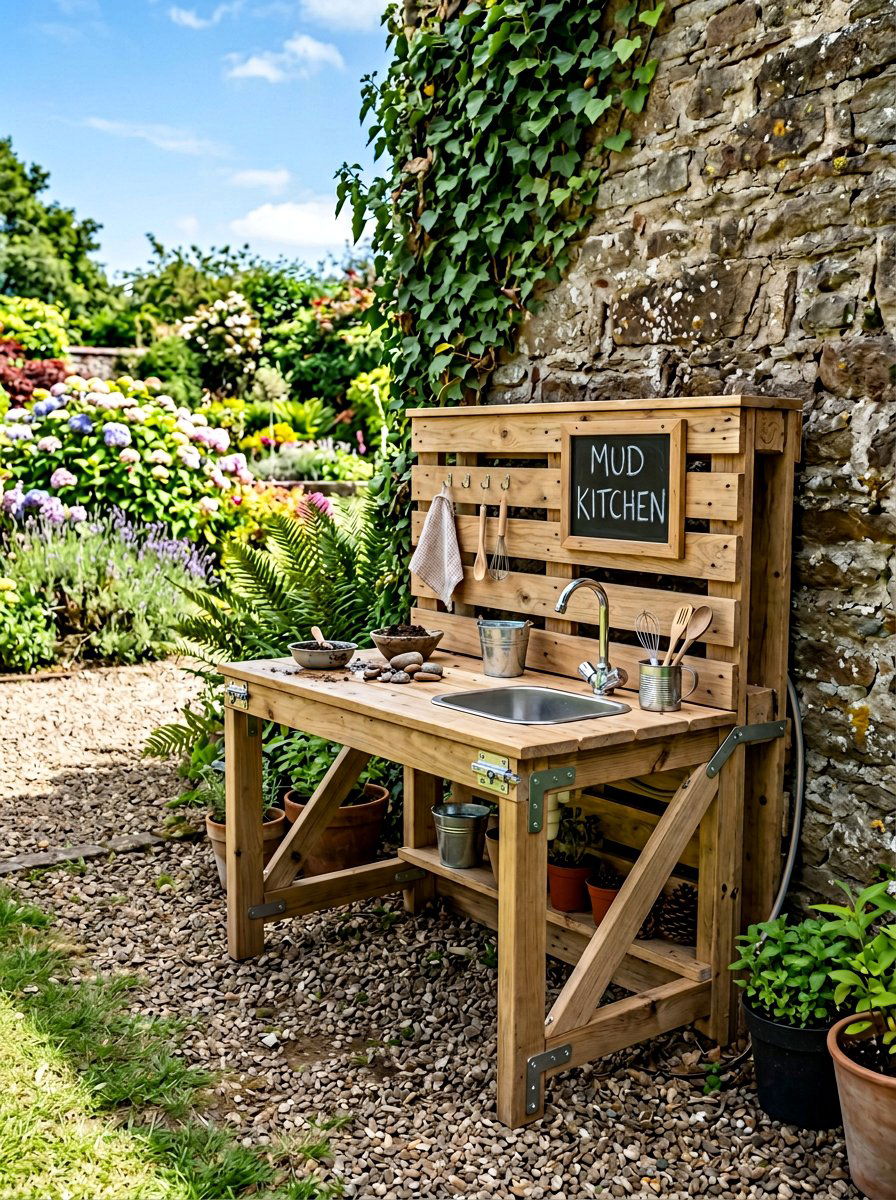
A folding pallet mud kitchen is a smart choice for families who have limited outdoor space or want to store the unit during winter. By using heavy-duty hinges, you can create a countertop that folds down when it is not in use. This allows the kitchen to sit flush against a wall or fence, freeing up the lawn for other games. You can also design the side panels to fold inward for easy transport or storage in a garage. Despite being portable, the pallet construction remains strong enough for vigorous daily play. This flexible design is perfect for renters who may need to move their play equipment.
15. Mud Kitchen With Shelf Storage
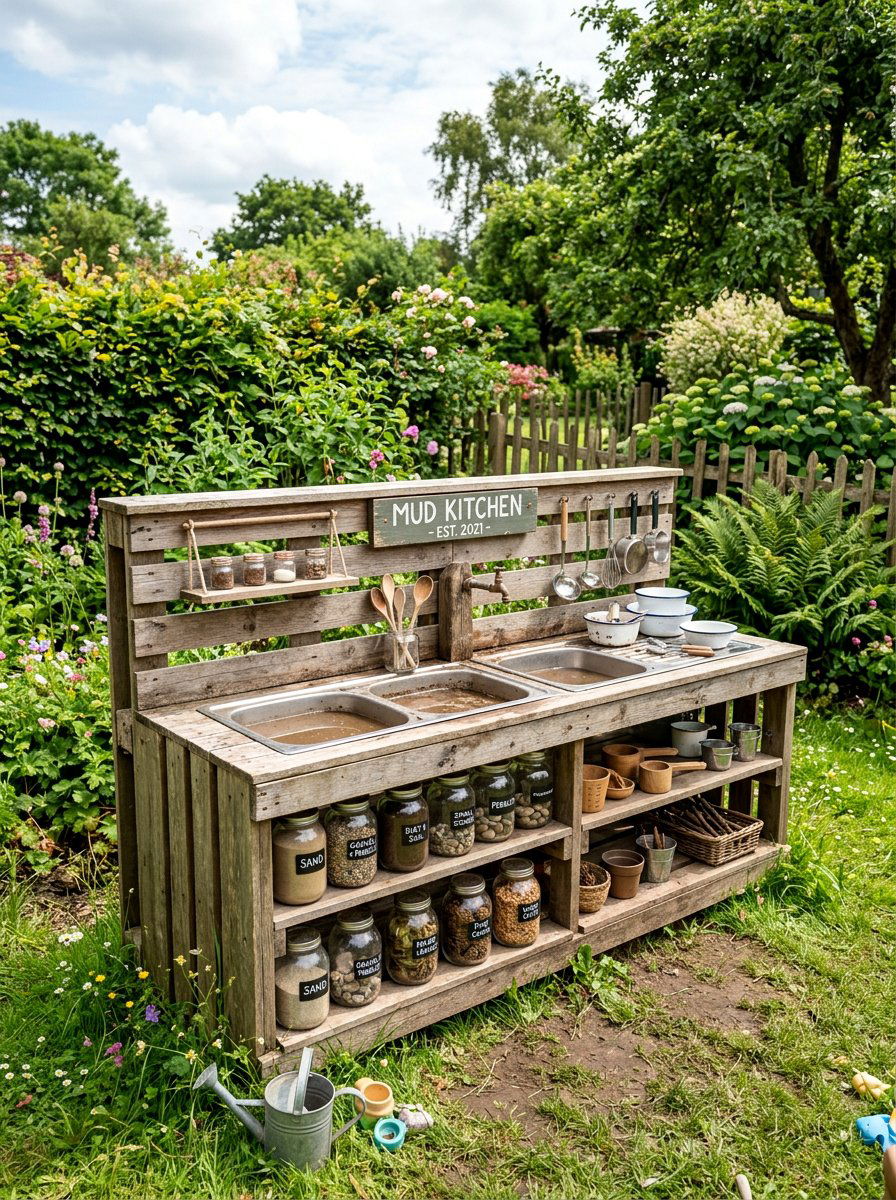
A mud kitchen with shelf storage provides plenty of room for all the natural treasures children collect in the garden. You can use the internal gaps of the pallets to create built-in shelving for rocks, acorns, and dried leaves. Adding extra horizontal boards gives you even more space for jars filled with colorful sand or water. Having designated spots for ingredients helps children stay focused on their imaginative play without getting frustrated. The shelves also act as a display area where kids can show off their finished mud cakes and pies to the family. Organized storage makes the kitchen look neat and tidy in your backyard.
16. Natural Wood Mud Kitchen
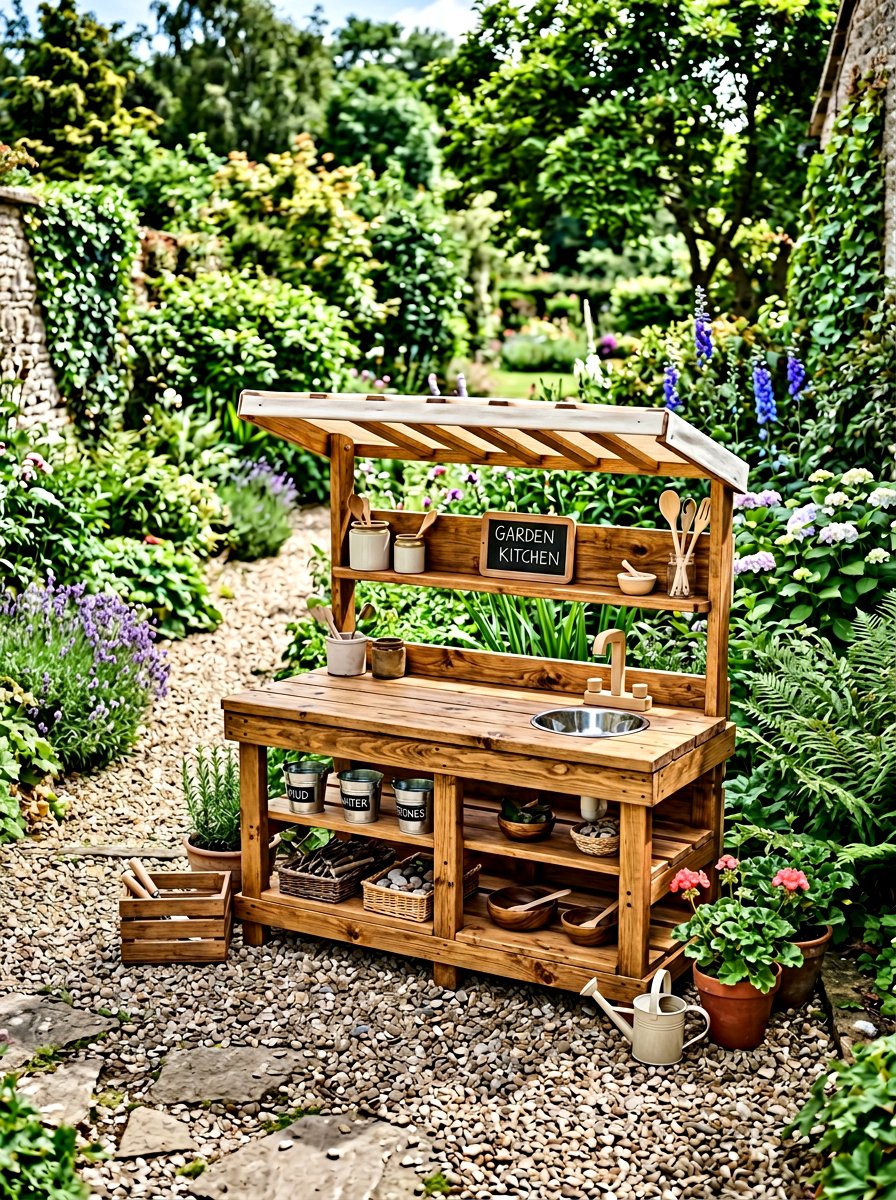
A natural wood mud kitchen celebrates the organic texture of timber without any paints or stains to hide its character. To protect the pallets while keeping the look, you can apply a clear, non-toxic wood sealer that prevents rot. This style is perfect for a nature-inspired garden where you want play equipment to blend into the landscape seamlessly. The neutral tones of the wood allow the colors of the mud, grass, and flowers to stand out during play. It creates a calm and grounded environment that encourages kids to focus on the textures of the earth. Natural wood also feels wonderful and warm under small busy hands.
17. Mud Kitchen With Working Oven
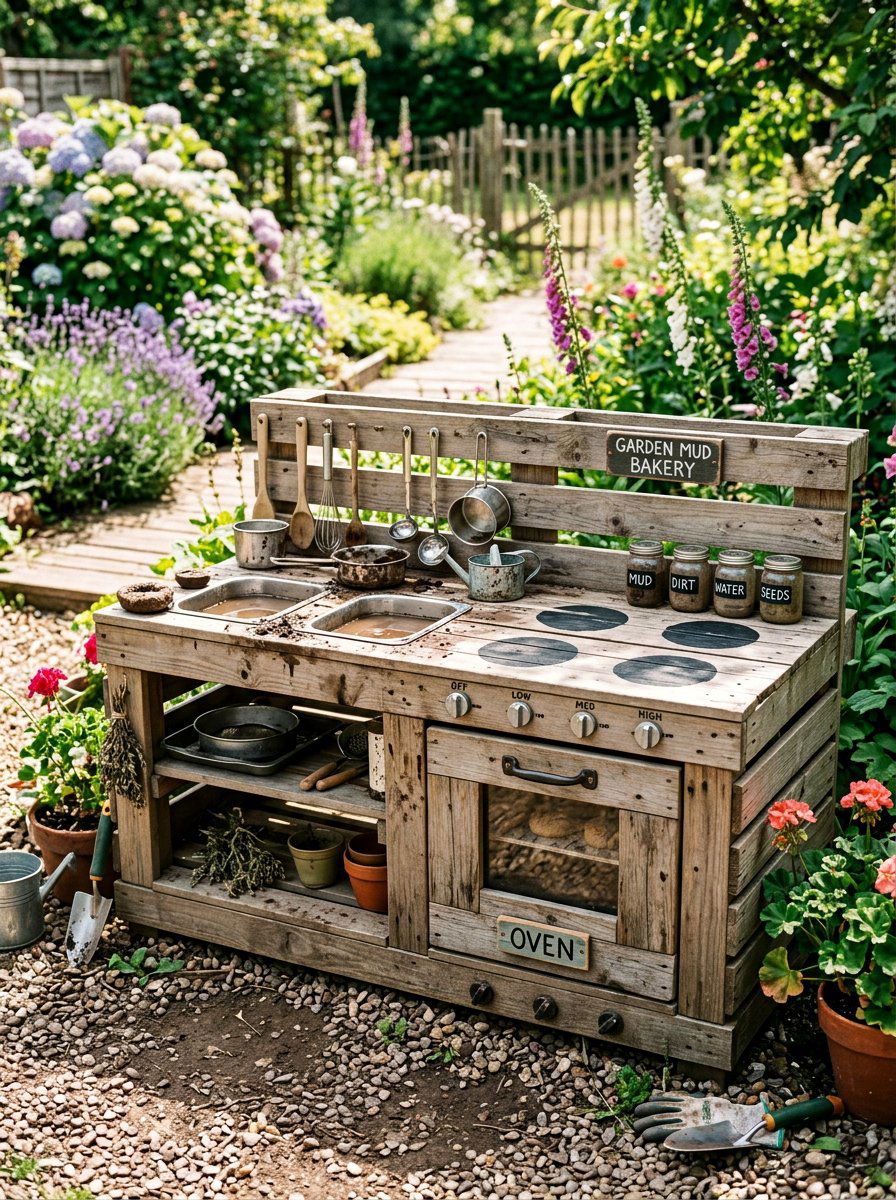
Adding a working oven feature to a pallet mud kitchen brings a whole new level of pretend play to the backyard. You can create an oven door using a smaller piece of wood or a repurposed pallet slat attached with hinges. A simple shelf inside serves as the rack where kids can "bake" their mud loaves and leaf cookies. Painting some black circles on the countertop can simulate stovetop burners for even more cooking fun. This design encourages children to mimic the actions they see adults doing in the real kitchen. It provides a complete culinary experience that keeps them engaged for hours in the fresh air.
18. Wide Mud Kitchen For Multiples
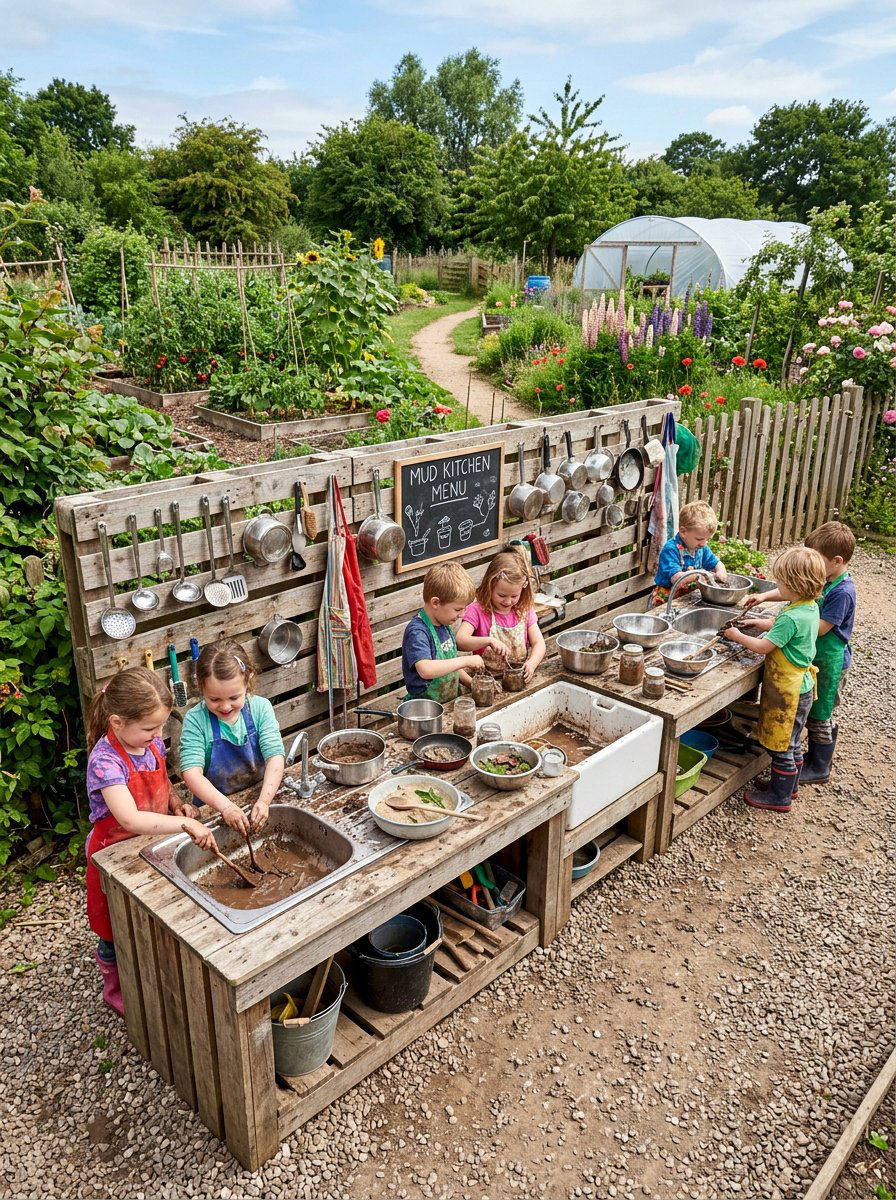
A wide mud kitchen for multiples features a long, continuous countertop made from several pallets joined together in a row. This expansive layout is ideal for large families, preschools, or community play areas where many children gather at once. It provides enough elbow room for everyone to have their own "station" without overlapping. You can install multiple sinks along the length of the counter to allow for several water activities simultaneously. The long backboard offers plenty of space for many sets of hooks and shelves. This grand scale makes the mud kitchen a major destination in the garden for social play and big projects.
19. Mud Kitchen With Curtains
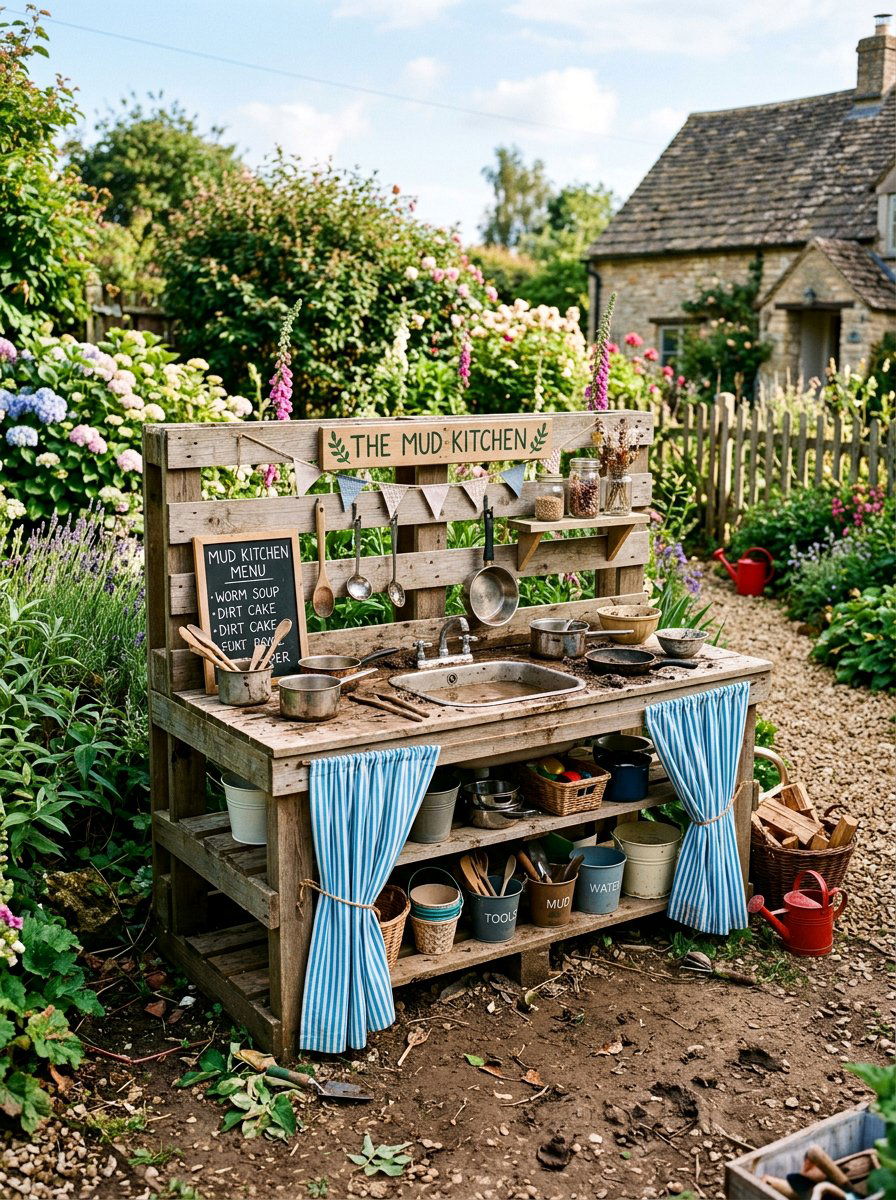
Attaching curtains to the lower sections of a pallet mud kitchen adds a soft touch and a bit of mystery. You can use colorful outdoor fabric or old tea towels to hide the storage shelves beneath the countertop. Children love the "hide and seek" aspect of pulling back the fabric to find their hidden pots and pans. Curtains also help protect stored items from direct sunlight or light rain when the kitchen is not being used. You can easily remove the fabric for washing if it gets splashed with mud or dirt. This simple addition makes the pallet structure feel more like a cozy home or a little shop.
20. Portable Pallet Mud Kitchen
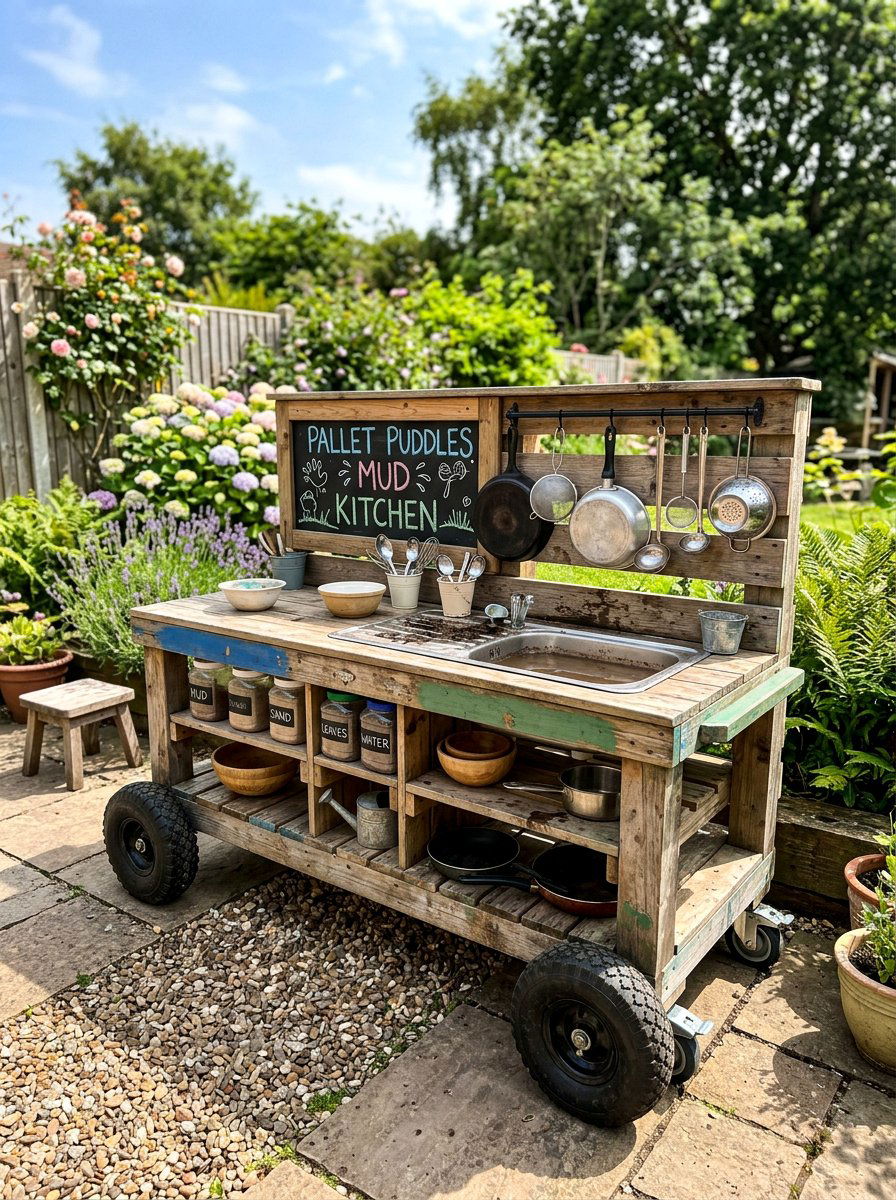
A portable pallet mud kitchen equipped with heavy-duty wheels allows you to move the play station around your yard with ease. You can roll the kitchen into the shade on hot summer days or move it closer to the patio during a barbecue. Locking casters ensure that the unit stays securely in place once you have found the perfect spot for play. This mobility is great for protecting your lawn, as you can shift the kitchen to prevent any one patch of grass from getting too muddy. A portable unit is also easier to clean because you can move it to a paved area for a deep hosing.
21. Mud Kitchen With Serving Hatch
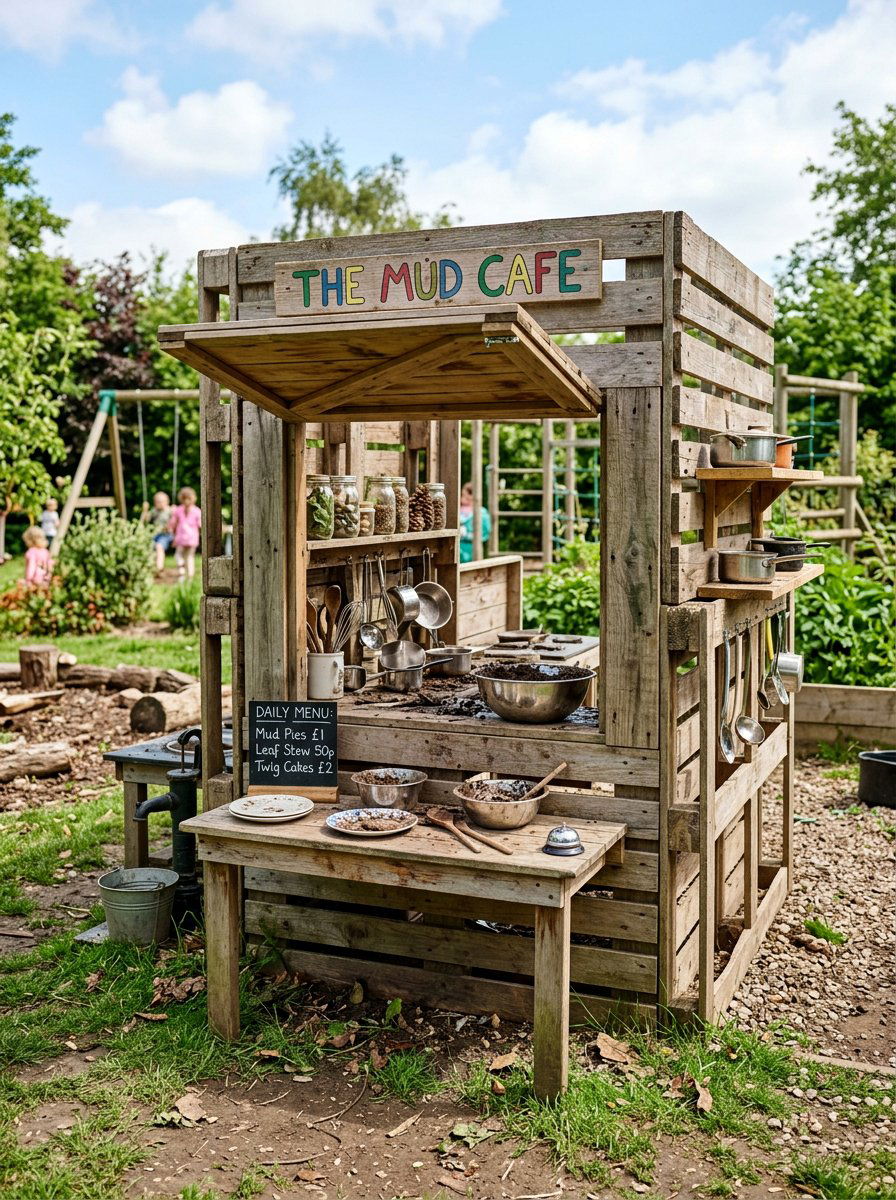
A mud kitchen with a serving hatch encourages role-playing games where children pretend to run a restaurant or a bakery. You can build a raised shelf or an open window section in the pallet backboard for passing "orders" through. One child can be the chef behind the counter while another acts as the customer on the other side. This interaction helps develop social skills, language, and the concept of turn-taking. The hatch creates a clear boundary that defines different play zones within the garden. It turns the mud kitchen into a social hub where friends and family can interact through imaginative food service.
22. Heavy Duty Pallet Kitchen
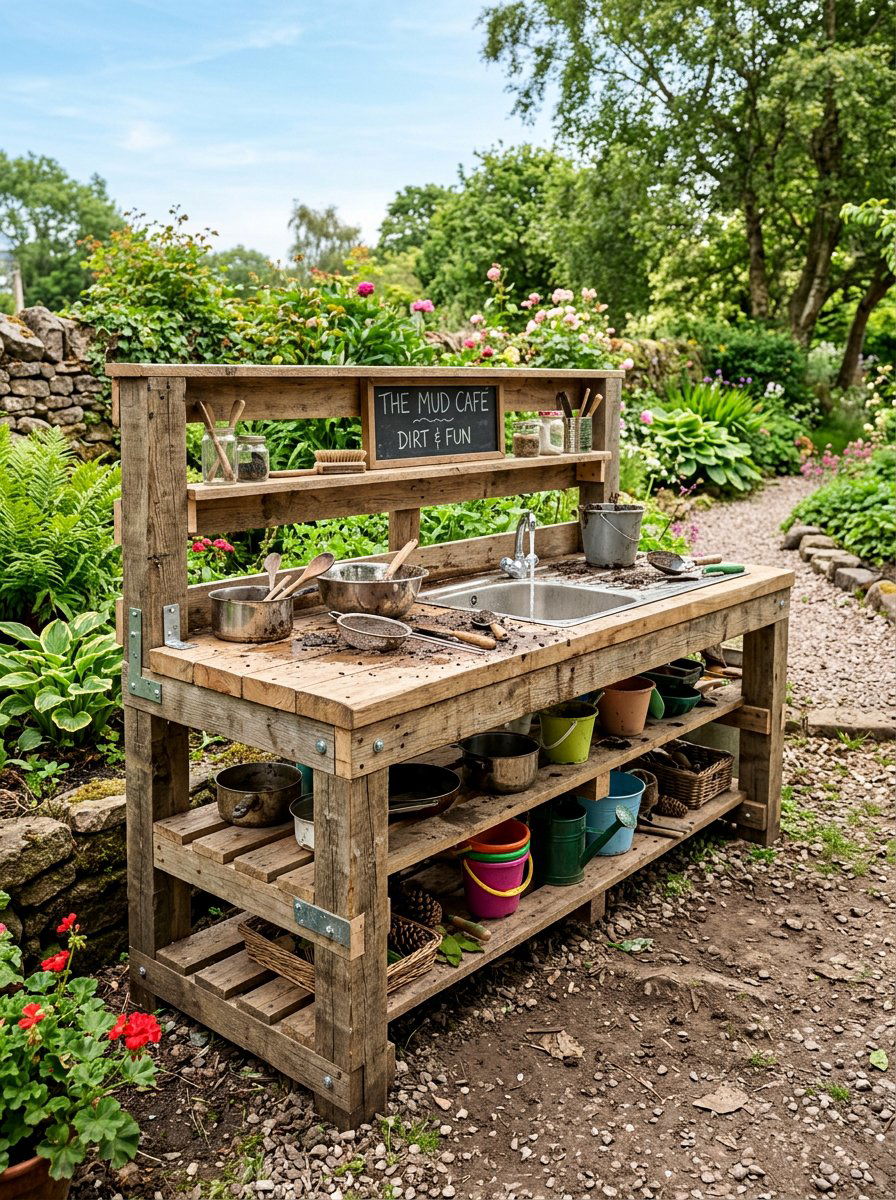
A heavy duty pallet kitchen is built to withstand the most enthusiastic play and harshest weather conditions. By using thicker pallets and reinforcing the joints with sturdy outdoor screws, you create a play station that is incredibly durable. This design is perfect for older kids who might use more force or for areas with high winds and heavy rain. You can add extra bracing to the legs to ensure the kitchen remains perfectly level on uneven ground. The weight of the pallets makes the structure very stable, so it will not tip over during busy play sessions. It is a long-lasting investment in your child's outdoor development.
23. Mud Kitchen With Rain Barrel
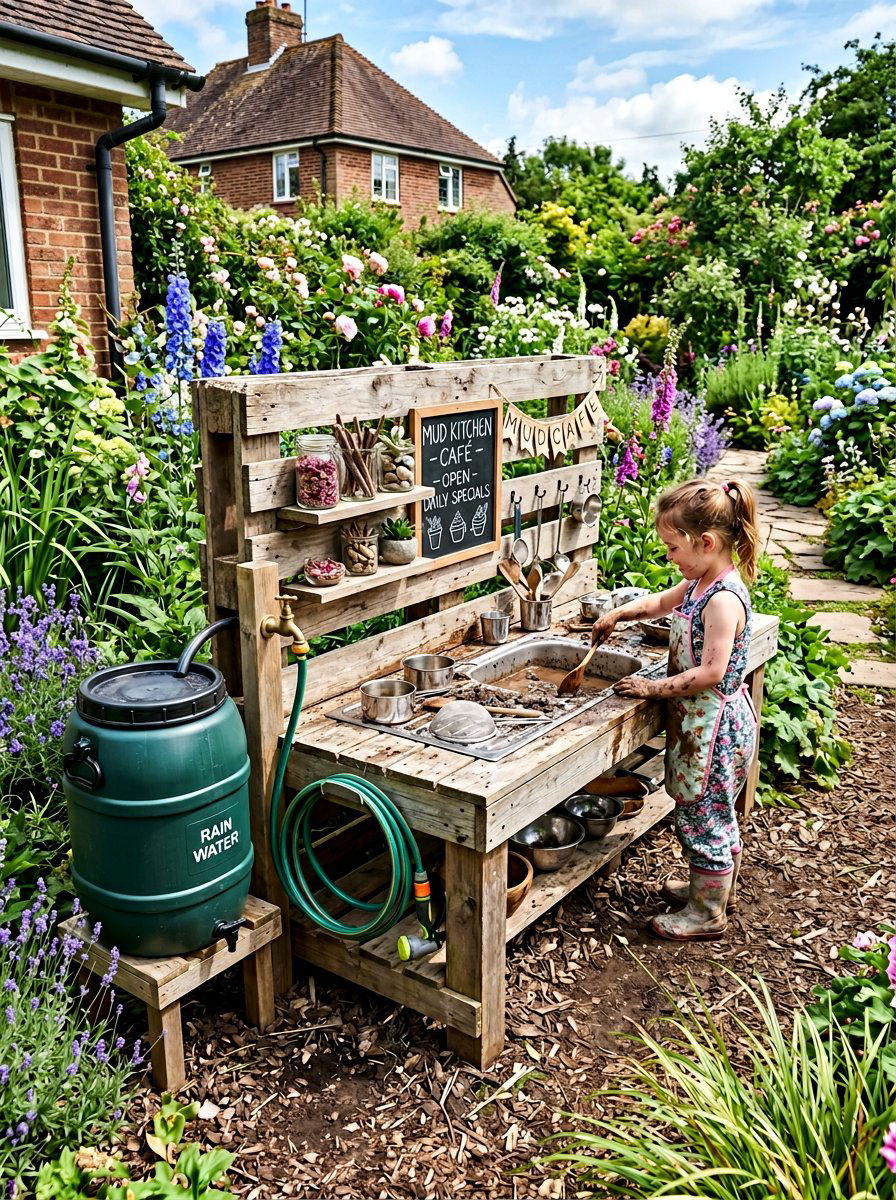
Connecting a mud kitchen with a rain barrel is a brilliant way to teach children about water conservation and natural resources. You can position the kitchen near a downspout or a dedicated barrel to provide a sustainable source of water for play. Kids can use a small tap on the barrel to fill their containers, learning to value every drop they use. This setup eliminates the need for a garden hose and makes the play area more eco-friendly. It also creates a wonderful cycle where rain from the sky helps them create their mud recipes. It is an excellent practical lesson in environmental science for young learners.
24. Minimalist Pallet Mud Kitchen
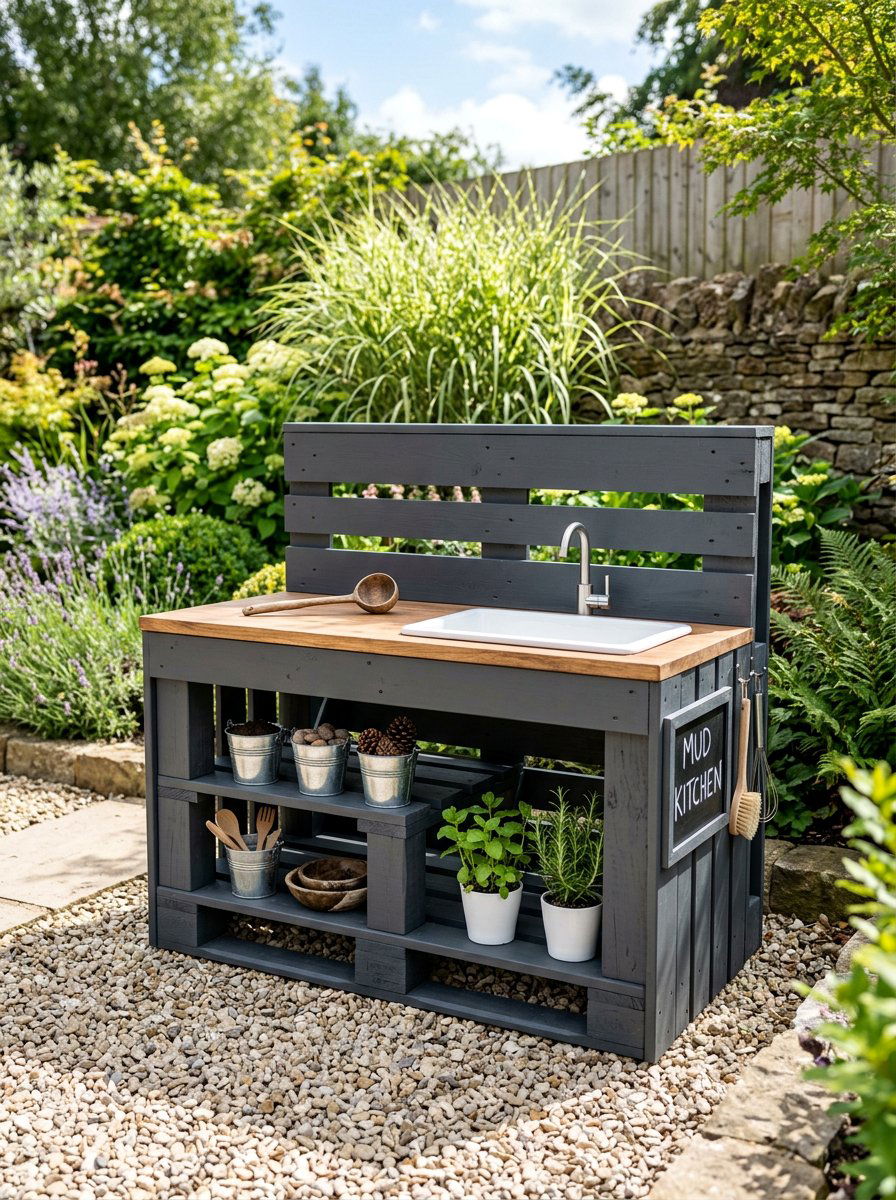
A minimalist pallet mud kitchen focuses on clean lines and a clutter-free design for a modern garden look. This style uses simple pallet frames without excessive decorations or unnecessary features. It provides a blank canvas that allows the child's imagination to take center stage without distractions. You might choose a sleek monochromatic paint job, like charcoal grey or white, to make it look sophisticated. The minimalist approach is very easy to build and maintain over time. It proves that you do not need complex gadgets to facilitate deep and meaningful play. This design fits beautifully into contemporary landscapes while still offering plenty of sensory opportunities.
25. Mud Kitchen With Sandbox
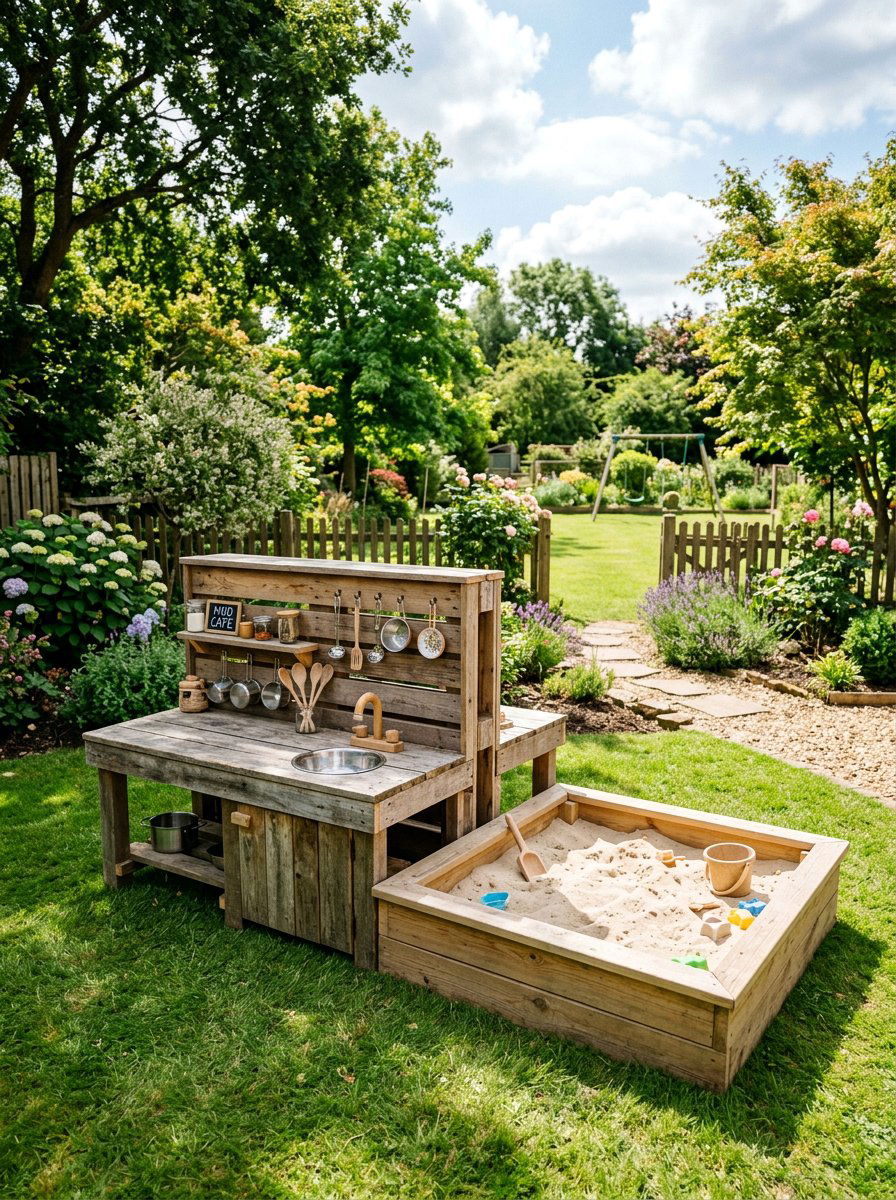
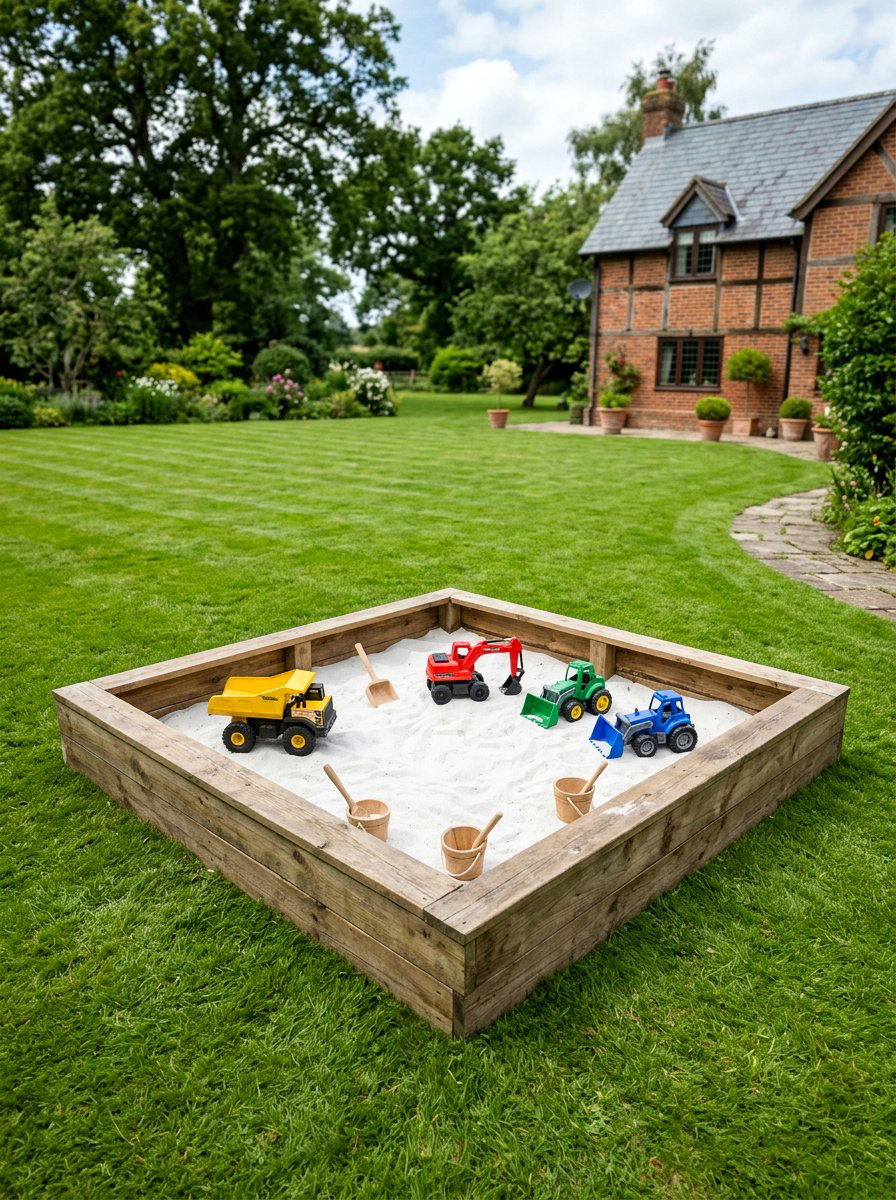
A mud kitchen with a sandbox attached creates the ultimate sensory destination for children in the backyard. You can build a low pallet box on one side of the kitchen to hold sand for digging and building. This combination allows kids to experiment with different textures by mixing dry sand, wet sand, and mud together. It keeps all the "messy" play activities in one centralized location, which makes cleanup much easier for parents. Having a sandbox right next to the kitchen prep area expands the possibilities for imaginative play. Children can make "sand cakes" and decorate them with mud "frosting" in one seamless play flow.
Conclusion:
Building a mud kitchen from pallets is a rewarding project that provides children with endless hours of creative play and discovery. Whether you choose a simple design or a complex station with water pumps and sandboxes, the benefits for a child's development are truly immense. These structures are durable, eco-friendly, and can be customized to fit any garden size or style preference. By giving kids a dedicated space to get messy, you are fostering a deep connection with nature and helping them build important life skills through play. Your backyard will become a place of wonder where imagination grows alongside your beautiful garden plants.
Related DIY Ideas to Try: